


.png)
Euphoria Isn’t About Strong Women, It’s About Watching Them Fall Apart
- Sarah Kanaan
- Apr 30
- 3 min read
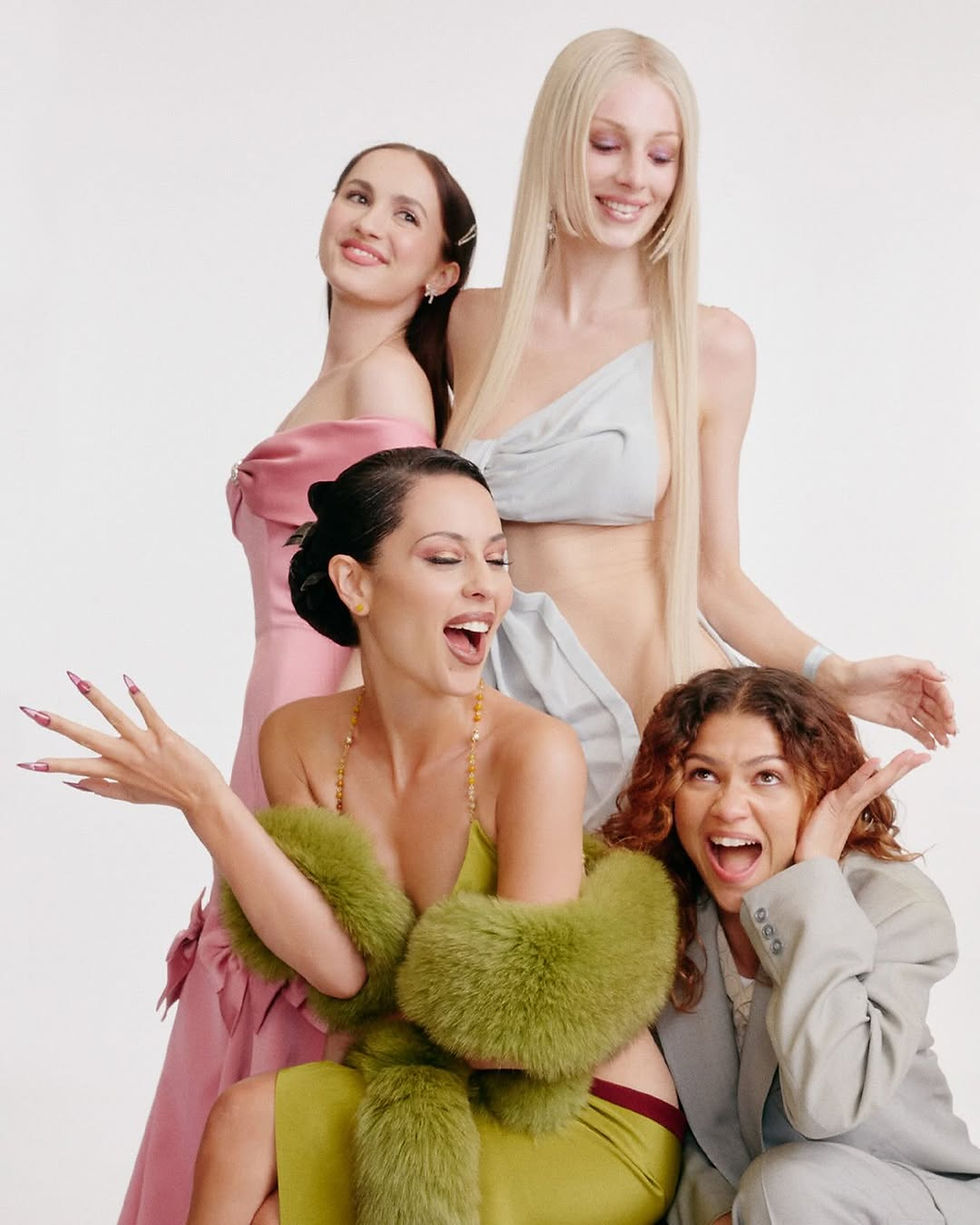
When the first episodes of Euphoria season 3 dropped, critics did not hold back: “torture porn” ,“one man’s creepy, sex-obsessed fantasy”,“a series with very little to say.” Viewers who had loved the show since 2019 felt something had shifted, and not in the direction they hoped. The female characters feel staged, positioned, consumed by the camera in ways that feel less like storytelling and more like fixation. Watching them, I kept thinking about an archetype that’s been misunderstood for centuries, and how Euphoria might be the most revealing example of that misunderstanding we’ve seen in a long time.
“Beauty, like monstrosity, enthralls, and female beauty in particular was perceived to be both enchanting and dangerous, or even fatal.” - Kiki KaroglouThe femme fatale. One of the oldest archetypes, appearing long before cinema could even represent her: Eve, Medusa, Salome, Lady Macbeth. An image so charged with desire and danger that simply existing became an act of defiance. The Oxford Dictionary defines her as “an attractive and seductive woman likely to cause distress or disaster to any man who becomes involved with her.” But that definition is already set up for failure by putting the man at the centre of the story. She was never feared for her seduction. She was feared for her refusal.
In film noir, she arrived beautiful, calculating, punished almost every time. The logic was circular and self-serving: if a man loses control, a woman must have taken it. As one observer put it, “the woman becomes villainous because she manipulates the manipulator, and the male ego finds that terrifying.” She was not the villain. She was the mirror.
But she evolved. The femme fatale stopped being punished for what she represented and started using it. We want what we can’t have, and lose interest the moment we get it. She learned to live in that gap on purpose, wanted precisely because she cannot be owned. That’s not danger. That’s freedom. And freedom, in the wrong hands, can become the most threatening thing a woman can possess.
Amy Dunne in Gone Girl is the fullest version of that strategy. She didn’t just survive the gaze; she weaponised it, disappearing and turning the idea of the perfect wife against the man who took her for granted. She controls exactly how she is seen, and she uses it to win.
Then came Euphoria. And the evolution stopped.
Maddie has all the surface qualities of a femme fatale: the dramatic eye makeup, the confidence, the way guys orbit her like a gravitational force. The show frames her that way deliberately; shot like someone dangerous, someone who holds all the cards. But she never actually does.
Her entire arc is shaped by Nate, a guy who controls her, isolates her, hurts her. The camera gives her the iconography of the dangerous woman while the narrative removes every trace of her power. That gap isn’t a creative choice. It’s the contradiction at the centre of what Euphoria does to its women, and never resolves.
Cassie is the other side of the same problem. In season 1, she had real potential: a girl shaped by abandonment, searching for love in the wrong places, genuinely complicated. By season 3, that complexity has been traded in entirely. She is making OnlyFans content dressed as a puppy while begging Nate to spend fifty thousand dollars on wedding flowers. Viewers called it a “humiliation ritual.” The Guardian called it “bafflingly dated.” I would say it’s a woman reduced to a punchline for desires that belong to everyone but her.
Because Cassie is not a character anymore. She is a mirror held up to what happens when a culture becomes so comfortable consuming images of women that it stops noticing the difference between a story about a woman and a story performed on one. The show does not critique this. It participates in it. She is not navigating her own desires. She is performing someone else’s fantasy, and the camera watches without flinching, without questioning, without consequence. That’s not storytelling. That’s the same old misogyny with a bigger budget.
Both Maddie and Cassie carry the surface traits of the femme fatale; beauty, intensity, sexuality. Neither has what actually defined her. Sam Levinson takes the aesthetics of the archetype and strips out the only thing that ever made her interesting: her agency. His women look like femme fatales and function as objects.
The real femme fatale was never punished for being seductive. She was punished for being free. And even when she was gone, she was impossible to forget. That was always her power. But Euphoria’s women do not win. They spiral, perform, and are watched. The femme fatale was never dangerous because she seduced. She was dangerous because she didn’t need anyone to choose her. That’s the version we are still not ready to show.


I love the way this article is written. Really puts in perspective the way the femme fatale is represented across modern art and how it is used.
Thank you!
really interesting article!!
I loved this article and its comparative aspect throughout. The misrepresentation of the “femme fatale” in books and movies is something that needs more critical evaluation to better shape the message that art sends to people, escpecially its conception of women.
this was so interesting to read, loved the femme fatale aspect !!