


.png)
The 'Perfect Body' Is Keeping Women Small.
My mother is one of the most beautiful women I know. Yet my whole life, she has insisted that she “looks horrible.” Taking candid photos of her or even a selfie together always turns into a battle, with my mother either pushing the camera away or fluffing up her hair while saying, “God, I look terrible." Nothing makes my blood boil more than hearing her say those words.
Every time she protests a gorgeous photo of herself sent in the family group chat, I am reminded of how deeply society has conditioned her never to feel comfortable in her own skin. One can't blame her, though, given the cultural landscape she has lived through. Her teenage years were shaped by the German low-calorie diet and fitness culture of the 1980s. The formative years of her twenties coincided with the diet culture of the 1990s, when Kate Moss' infamous quote, "Nothing tastes as good as skinny feels," was everywhere. Her thirties and forties unfolded alongside the arguably even harsher beauty standards of the early 2000s, all while carrying and giving birth to three daughters.
It is a curious thing to grow up being told that you must constantly shrink and change yourself, with no end or satisfaction in sight. Every decade produces a new unattainable expectation, dictating how women should look, how they shouldn't look, and what their bodies supposedly say about them. All so they can fit into a standard that was never truly attainable in the first place; a standard that polices women's bodily autonomy and individuality.
I believe one of the primary functions of commercialised beauty standards is to plant self-doubt into the minds of women about their worth and place in society. Across every era of beauty standards, a single image is elevated so relentlessly that women are convinced they are devoid of beauty or social value if they fail to fit that exact mould. Individual nuance, talent, intellect, and purpose become minimised beneath the weight of an unattainable ideal.
This reveals three key functions of commercialised beauty standards: self-policing, minimisation and the theft of time and space.
Self-Policing
Have you noticed how it only takes a handful of viral moments or heavily funded campaigns to establish the next "ideal" body for women? A perfectly marketed image of one person's; often edited, body quickly becomes an internal benchmark for millions of women. Think about how rapidly beauty standards shifted towards an increasingly unhealthy ideal of thinness as celebrities using Ozempic seemingly became thinner overnight.
In a world where women's bodies are constantly regulated and scrutinised, it benefits that system to have women perform the scrutiny themselves. The mental energy women spend examining themselves in the mirror and forcing themselves into constant self-regulation conditions them to obey an almost invisible higher power that encourages them to shrink themselves voluntarily. Diet culture drags women into toxic cycles of restrictive eating and unhealthy exercise routines that encourage movement not for pleasure or health, but out of shame.
Exercise should be rooted in wellbeing, not in the belief that your body is somehow inadequate without it. From personal experience; and from countless conversations with other women, I know that exercising from a place of punishment only deepens insecurity and self-hatred. When our thoughts about our bodies begin with criticism instead of acceptance, that feeling of inadequacy slowly extends into every other area of life. Women are therefore persuaded into regulating away their own bodily autonomy in favour of what I call "the standards that be." Women are socially conditioned never to fully accept their own bodies. Individuality itself becomes something to police. Women learn to identify any deviation from the current beauty standard as "ugly" or "unworthy," eventually categorising themselves as "not enough" or "lazy."
Minimisation
These feelings of inadequacy seep far beyond appearance. If a woman believes she is "not enough" because she does not meet an idealised beauty standard, every other achievement in her life begins to feel diminished by comparison.
A woman's appearance continues to grant her social status within patriarchal systems that reward women only when they reflect narrowly defined ideals of femininity. Those who do not; or simply refuse to, fit those ideals are often dismissed or treated as less valuable. In a culture that consistently undervalues women's intellectual, creative, and individual pursuits, many women are led to believe that achieving the "perfect body" will finally make them fully worthy of respect.
As a result, women who cannot achieve these impossible standards; which is to say, most women, often perceive themselves as somehow incomplete, despite being intelligent, accomplished, and deeply capable. This creates a widespread tendency to minimise hobbies, careers, achievements, ambitions, and entire lives simply because they are not accompanied by the "right" body. Women are trained to feel less accomplished, less confident, and less deserving of admiration if they fail to meet commercialised ideals of beauty.
The Theft of Time and Space
Self-policing and minimisation don't just damage self-worth. They consume time. Time is political, particularly within late-stage capitalism, where productivity often comes at the expense of personhood.
Beauty standards function as distractions. They occupy women's minds, not only by convincing us these ideals are natural rather than constructed, but by diverting attention away from the power women already possess.
It is no coincidence that beauty standards regulate women's bodies, because regulating women's bodies has long been one of patriarchy's primary methods of control. Political control over women's bodies, for example, can force many women into carrying pregnancies they do not want, consuming years of emotional, physical, and economic labour. Beauty standards operate similarly.
Working towards the "ideal" body requires enormous amounts of physical and mental time: exercising, shopping, researching treatments, analysing appearances, planning diets, and constantly monitoring oneself. Self-regulation quietly consumes countless hours of women's lives. Imagine what women could create if those hours were returned to them. Beauty standards distract us from the possibility of a society where women are free from constant self-surveillance. They distract us from recognising that self-policing is itself a form of control; that we are making ourselves smaller on behalf of a system that benefits when women doubt their abilities, minimise their achievements, and underestimate their own power.
The points made here are also merely the tip of the iceberg to the subtleties which make up this paradox. Women's beauty standards continue to rise and fall alongside economic conditions. Women of colour and women from marginalised communities face additional pressures to conform to standards that were never designed to include them in the first place. Today, however, beauty culture feels particularly sinister. With Ozempic making medical weight loss widely accessible, the benchmark has become even more unattainable.
Medical shrinking; where there is no medical necessity, has helped create a dystopian cultural landscape in which individuality, expression, and authenticity are slowly disappearing as public figures increasingly begin to resemble one another. Even more disturbing is the timing. This celebration of chemically induced thinness has emerged while millions of people around the world face war, displacement, and starvation. While families in places like Gaza and South Sudan struggle simply to survive, some of the wealthiest people on Earth are paying extraordinary sums to achieve the appearance of deprivation while enjoying unlimited access to food and resources.
As long as these images continue to be elevated by social media; and by us, they will continue to define what society prizes. Thankfully, I also believe something is shifting. Over the past few months, I've noticed growing resistance across comment sections, video essays, and Substack newsletters. More people are openly criticising the hypocrisy and dangers of today's beauty standards. Former body-positive celebrities are increasingly being questioned after dramatic weight loss, while everyday people are recognising how inaccessible and unrealistic these ideals truly are.
Every body is different. Every body deserves dignity. We must free ourselves from the control embedded in how we perceive our own bodies if we hope to free ourselves from the patriarchal systems that profit from our self-regulation, minimisation, and self-doubt.
This essay began with my mother. She is the perfect example of how cultural expectations can erode even the confidence of an extraordinary woman. She is self-sufficient, intelligent, kind, caring, powerful, and beautiful. To me, she is perfect. Yet her own sense of that power has been diminished because, like countless women, she has spent a lifetime being told that her body; and therefore everything she has achieved, was somehow never enough. Women have ignored these standards before, and they should continue to.
Our individuality deserves to be celebrated on its own terms. Away with the expectations that tell us we are, and always will be, inadequate. Women are revolutionary in and of themselves. Our bodies are extraordinary vessels that deserve honour and respect, regardless of what they look like. Live proudly in your body. Because doing so is, in itself, a revolutionary act of resistance against those who wish to tame and control women.
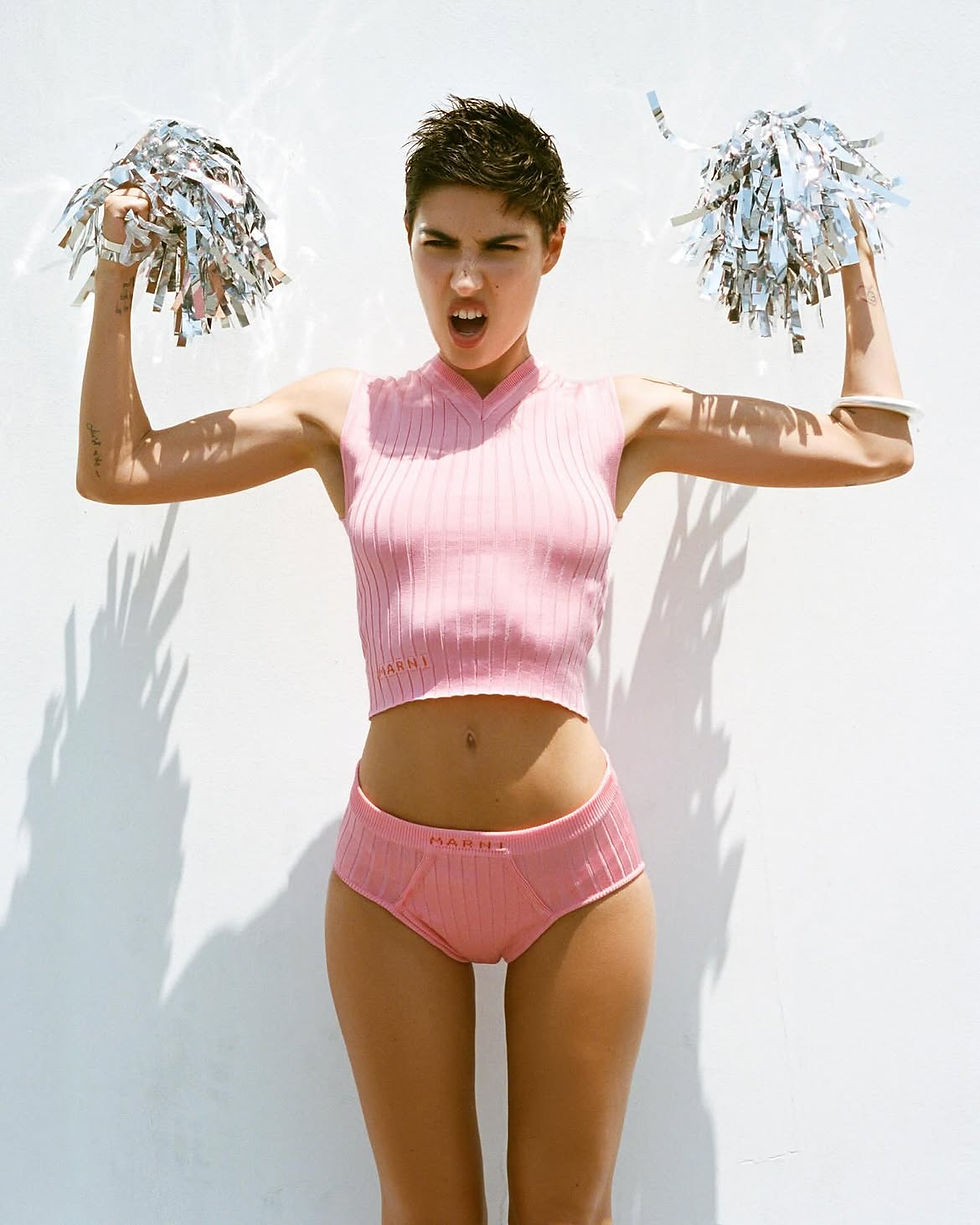
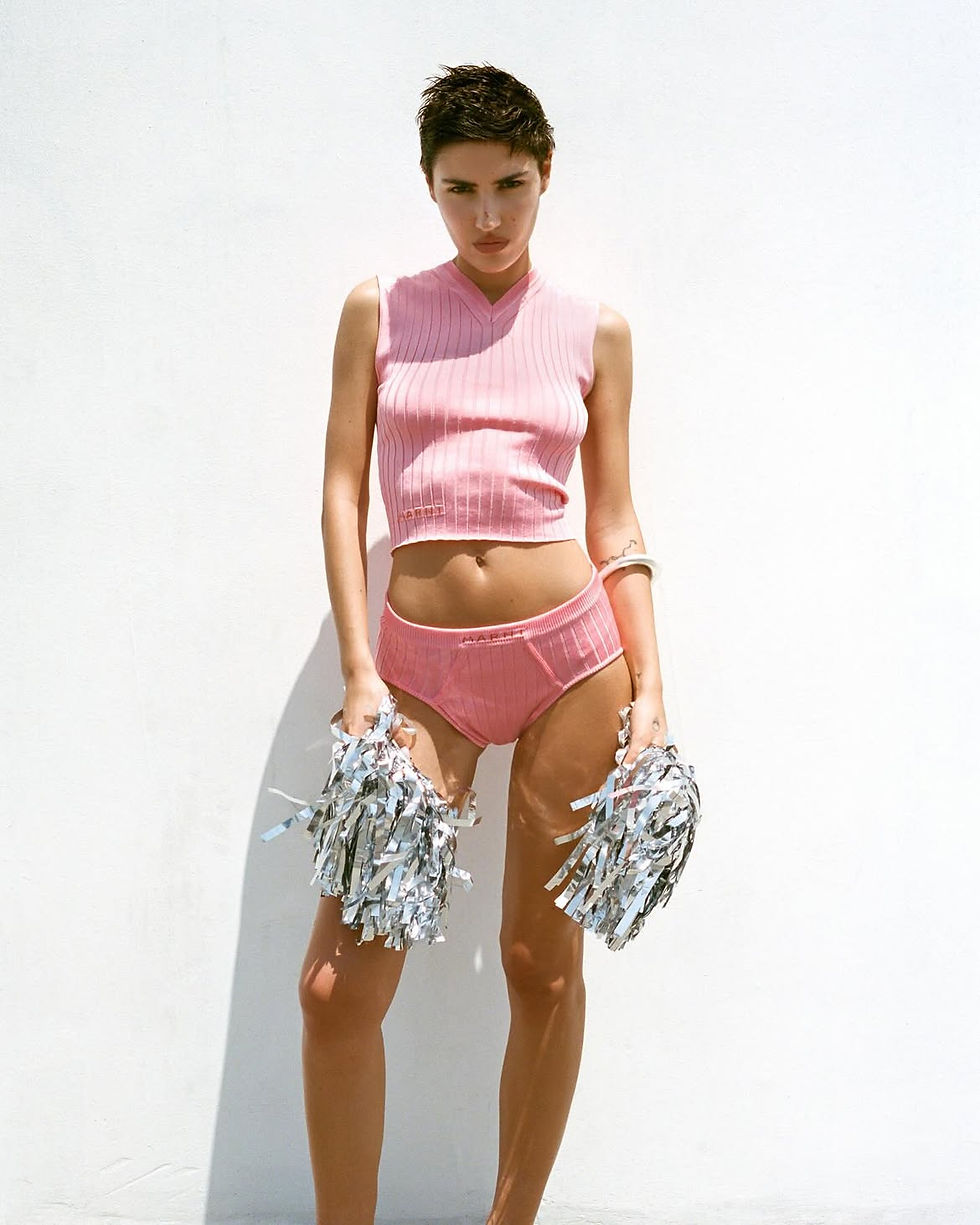
Photo © Patricia Manfield Photographed by Michael Percy (@michaelpercy_)


Comments