


.png)
Fashion Keeps Changing Women’s Bodies and Calling It Liberation.
From flapper dresses to GLP-1s, fashion’s idea of liberation has always come with a preferred body. The newest trend on the runway isn’t a shape, a colour or even a fabric. It’s a drug.

One in eight American adults say they are currently taking a GLP-1 medication such as Ozempic, a class of drugs that has become almost inseparable from conversations about weight loss and the return of extreme thinness. And according to The New York Times, their influence is beginning to reach somewhere perhaps inevitable: fashion.
For decades, fashion has responded to the body. Now, it is responding to a body that can increasingly be medically manufactured. Designers are exaggerating curves that are disappearing from the cultural ideal, while others are rejecting body-conscious clothing altogether. The result looks new, but the logic behind it is surprisingly familiar.
Fashion has been here before.
When the Body Becomes the Trend
For years, we talked about body types as though they were fashion cycles. The BBL body replaced the thigh gap; exaggerated curves replaced heroin chic; the tiny waist returned before disappearing again. Each era presented its preferred female silhouette as an aesthetic rather than what it actually was: a demand placed on the body itself.
GLP-1 drugs have complicated that relationship because the fashionable body can now change faster than fashion does.
As thinner silhouettes become increasingly visible in celebrity culture, designers appear to be moving in the opposite direction. Dior and Gaultier have played with sculpted silhouettes, exaggerated hips and architectural shapes that artificially widen the female form. Instead of asking the body to provide the curves, the clothes manufacture them.
Lyst has even predicted the female form itself as a fashion trend, which feels like an unusually literal description of where we have arrived. The body is no longer simply dressed by fashion. It is something fashion can exaggerate, conceal, reconstruct and eventually replace.
There is something almost ironic about watching clothes put back what weight-loss culture has encouraged women to remove. We chemically shrink the body, then purchase garments designed to make it appear larger again.
The Anti-Ozempic Wardrobe
Not every designer is responding by rebuilding curves. Chanel Haute Couture has moved towards slouchier tunics, fluid skirts and silhouettes that resist the increasingly body-conscious aesthetic associated with the Ozempic era. The language surrounding these clothes is familiar, too: comfort, freedom and liberation from the expectation that women should constantly display their bodies.
It sounds progressive because, in many ways, it is. A woman should not have to wear something tight simply because her body happens to conform to whatever silhouette is currently desirable. Clothing that allows the body to exist without displaying every inch of it can genuinely feel freeing.
But fashion has used the language of liberation before, and its history suggests that we should be slightly suspicious whenever one ideal claims to have finally freed us from another.
A century ago, Coco Chanel helped dismantle the restrictive Victorian silhouette. Corsets, elaborate construction and exaggerated curves gave way to shorter hemlines, looser dresses, tweed and the more androgynous lines associated with the flapper. Women could move differently in their clothes. They could occupy public life differently, too.
Yet the new silhouette came with its own requirement.
The Corset Never Really Disappeared
The flapper dress may have eliminated the physical corset, but according to the standards of the period, it looked best on a narrow, flat-chested body. The ideal had changed from artificially constructed curves to natural-looking thinness, and women were expected to change alongside it.
Diet culture expanded during the same period. Instead of reshaping the body through boning and fabric, women increasingly attempted to reshape it through food restriction, exercise and an emerging commercial dieting industry.
The corset had not disappeared so much as moved inward.
That distinction matters because fashion history often tells this story as a straightforward progression towards freedom. Women were restricted, Chanel loosened their clothes, and modern fashion liberated them. But one aesthetic did not simply liberate women from another. It replaced one constraint with a different one.
The Victorian woman was expected to manipulate her body through clothing. The modern woman increasingly became responsible for manipulating the body underneath it.
A hundred years later, GLP-1 culture makes that transformation even more literal. The silhouette can now be altered medically before the clothes are even put on.
Liberation Should Not Have a Dress Size
This is what makes the current fashion response so interesting. Whether designers exaggerate hips or hide the body beneath fluid fabric, both reactions reveal how uncomfortable fashion becomes when the culturally desirable body changes too quickly.
We keep interpreting these shifts as opposing movements. Curves are empowering until thinness returns. Body-conscious dressing is liberating until oversized clothing becomes a rejection of the male gaze. Showing the body is freedom, then concealing it is freedom. Every new silhouette arrives promising to correct the restrictions of the one before it.
Yet if liberation requires possessing the correct body to participate, it is not particularly liberating.
Perhaps the problem has never been whether fashion prefers curves or thinness, corsets or tunics, exposed bodies or concealed ones. The problem is that women’s bodies continue to be treated as part of the trend cycle at all.
Ozempic may be changing fashion, but it has not created this dynamic. It has simply accelerated something the industry has been doing for more than a century: announcing a new female ideal, rejecting the previous one and calling the transition freedom.
The clothes change. The expectation that women should change with them rarely does.
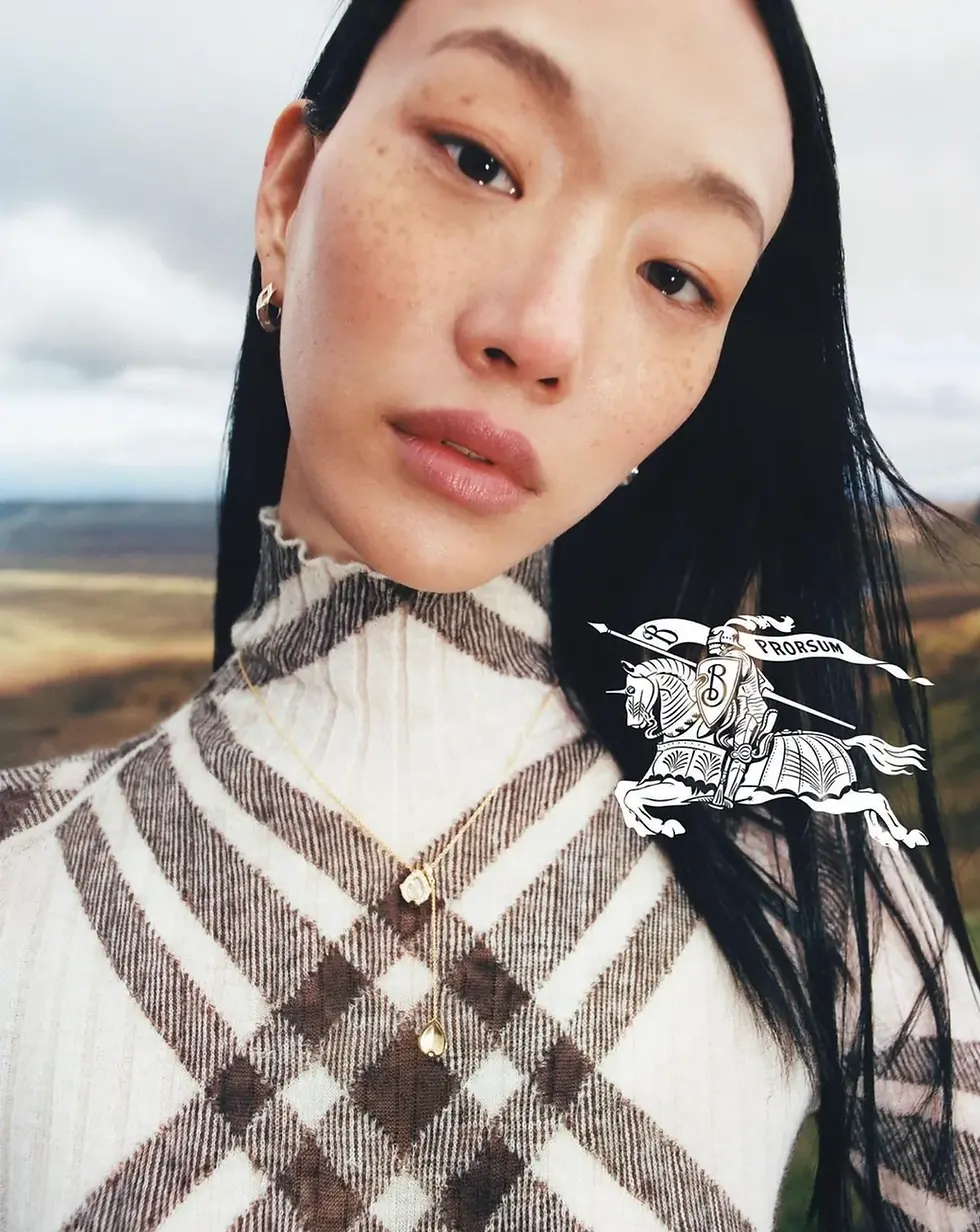
Photo © Hayley Pousson photographed by Zhenya Minaeva (@zhenyaminaieva)



Comments