


.png)
If ChatGPT Knows His Name, You’ve Gone Too Far.
It started with a text In my late twenties, I had the pleasure of experiencing something I’d never had access to during a breakup before: artificial intelligence.
I’m not entirely sure when I started using it for relationship advice. At first, it felt quite awkward. There is something bleak about opening a chatbot and typing out the intimate details of your romantic life to a machine.
So, obviously, it starts small.
Can you edit this text for me?
Then: Is this text too much to send?
Then: What would you send?
My ex-boyfriend was not a particularly good communicator, so the first time I involved AI in our relationship was out of genuine confusion. He sent me a message I did not understand, so I copied it in and asked: What the fuck does this even mean? And then I remember thinking: wait. Why is this kind of good? So I asked another question. Then another. I gave it more context. Suddenly, I had accidentally appointed a chatbot as my unpaid relationship counsellor.
My therapist has office hours. AI doesn't right?
My breakup was confusing because, for a while, I didn’t even know if it was a breakup. My ex had told me he wasn’t attracted to me, but we were still living together with six months left on our tenancy. I was bamboozled. Was I supposed to leave? Stay? Try to fix it? Accept it? I wanted answers faster than my friends or therapist could reasonably give them.
By the way, I did start therapy. I was doing the healthy thing, I promise! Unfortunately, the healthy thing costs me £90 for an hour and then sends me back into the scary world for another week.
Therapy is less useful at 11.47pm when you’re staring at a full stop in a text, wondering if it means something. However, AI is the top dog at 11.47pm.
Sometimes it helped me understand what my ex might have been trying to say. Other times, it helped me decide what I should say back. I asked it to identify patterns, tell me whether my reactions were reasonable and so on. I knew AI could be biased towards the person asking the question and, naturally, I decided I could outsmart this. Can you give me an unbiased view? Don't just validate me!
There was something scientific about the way I approached it by the end. I wouldn’t say it was revolutionary. AI did not reveal some previously undiscovered law of human attachment to me. Often, it told me things that I probably already knew.
The useful part was having somewhere to put the thought. People tell you to journal when you’re heartbroken. Get it out of your head and onto the page. Write the letter you’ll never send. Release the feeling somewhere other than directly into your ex-boyfriend’s WhatsApp notifications.
AI offers something slightly different. The page answers back. Oh God, it knows his name. I have great friends. I can call them, cry to them, send them screenshots and ask them to decipher the emotional significance of a three-word message. But friends are human beings with jobs and relationships and dinners to make.
AI never gets bored of hearing about the same man. And I know I’m not the only one. Around the same time, one of my friends was going through a much heftier heartbreak of her own after the end of a ten-year relationship. Somewhere in one of our conversations, she casually admitted that she had been using AI too, mostly to interpret situations and occasionally to ask for advice.
Apparently, we all do heartbreak with AI now. There were moments when this became weird even for me. I would begin asking something and realise AI already knew who I was talking about. It remembered his name. It remembered details. Sometimes I didn’t need to explain the backstory because the backstory was already there.
There is something sobering about a machine knowing your lore. Let the woman simmer. Yearning is deeply inefficient. It has produced some of our best films, music, books and art, alongside the less culturally significant contributions of staring at your phone, replaying a conversation fourteen times, sending a reply you regret ten minutes later and telling your friends you are completely done before doing something that indicates you are, in fact, not completely done.
All of that adds to the plot. There used to be natural gaps in heartbreak. You had to simmer.
We are very interested in emotional regulation now. We learn our attachment styles, identify our triggers, set boundaries, communicate our needs and try very hard to respond rather than react. Most of this is probably progress. But I wonder whether there is also beauty in the dysregulation, or at least growth.
Apparently, the auntie is software now. Dating apps were supposed to hand women more control over our romantic lives. Compared with the romantic lives available to generations before us, the difference is insane. Once, your dating pool might have consisted of friends of friends, colleagues, somebody from your community or the occasional stranger brave enough to approach you in public. Now, you can sit on the sofa and be presented with hundreds of theoretically available people before you’ve finished an episode of Love Island.
But even here, are we really doing all the choosing? Hinge may let me swipe, but it already knows what I like. Gangly East London creative? Yeah, show me more, babe.
The problem is that real life has always had the capacity to surprise us. People fall for people who aren’t their usual type. A person you might never have selected from six photographs becomes beautiful after three hours in a pub.
And now Hinge founder Justin McLeod is developing Overtone, an AI-led matchmaking service intended to move beyond profiles, swiping and endless simultaneous chats. AI gets to know you more deeply and helps make curated introductions. It sounds slightly Black Mirror to me. But also strangely familiar.
As a Sri Lankan Tamil woman, I grew up around the idea that romantic choice could be made slightly more manageable through family opinion, astrology, community and arranged introductions.
Western culture, meanwhile, spent a long time treating arranged marriage as an embarrassing failure to find love organically. Love was supposed to be spontaneous. Apparently, it becomes modern once the auntie is software.
Maybe AI should occasionally tell me to piss off. I wish I could end this by saying I recognised what was happening, deleted everything and now process my emotions on long walks without my phone.
I haven’t.
Maybe after your seventh consecutive relationship question, AI should just say:
HAVE YOU CONSIDERED SPEAKING TO A REAL PERSON?And after the twelfth:
GO FOR A WALK. I PROMISE THIS WILL STILL BE CONFUSING WHEN YOU GET BACK.Maybe the fact that people couldn’t always give us an answer was doing something useful. Nobody can tell you exactly why someone behaved the way they did, whether they really loved you or whether you made the right decision. Some things are probably supposed to stay unanswered for a while. The yearning has to go somewhere.
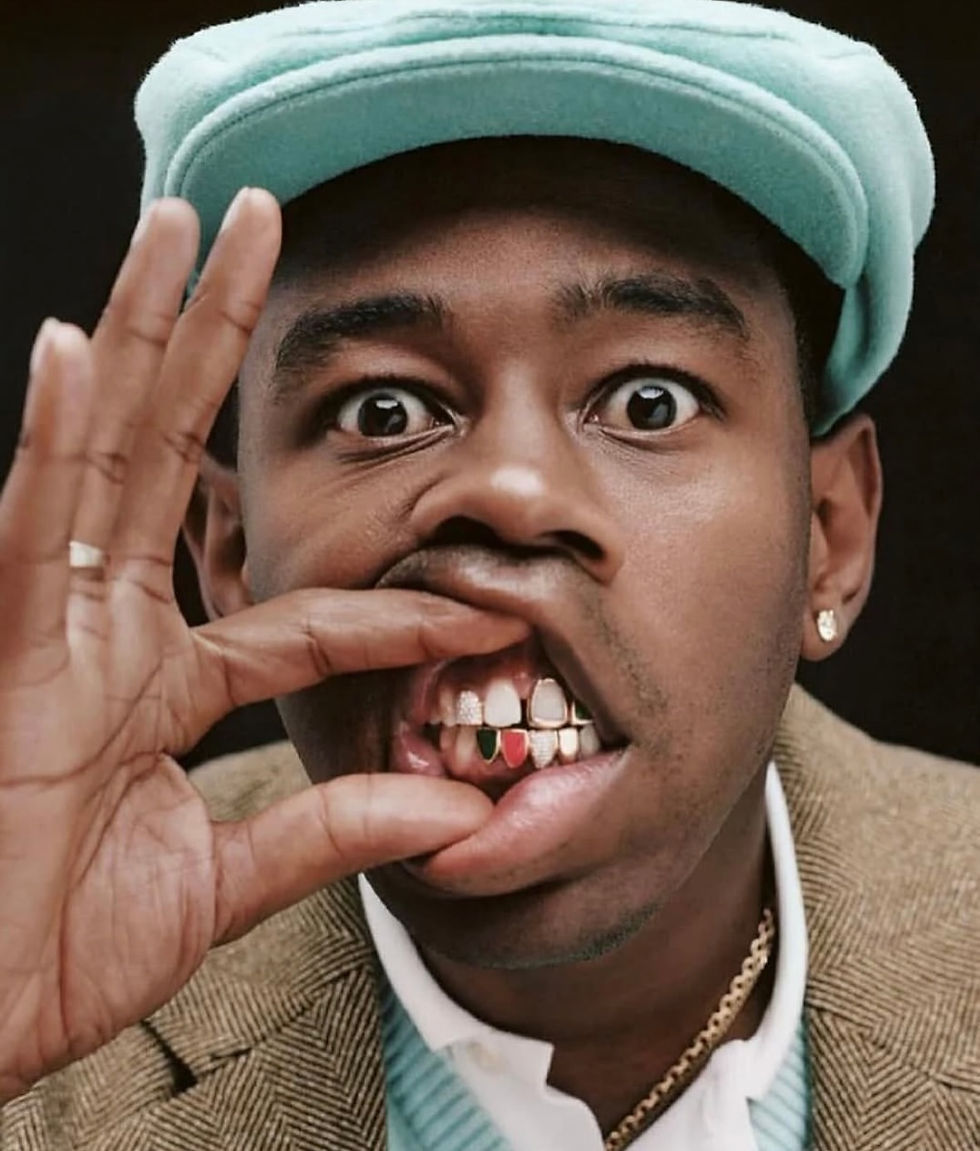
Photo © Tyler, The Creator Photographed by Campbell Addy for WSJ. Magazine.


Comments