


.png)
The Most Feminist Thing I Ever Did Was Doing Sports


I don't think women are taught to live in their bodies, contrary I think we're taught to look at them. From a surprisingly young age, our bodies become something to observe, evaluate, improve, and manage. Long before social media, and even before wellness culture turned self-optimisation into a full-time job, many girls learn that appearance matters. Not necessarily because anyone explicitly tells them so, but because they grow up absorbing it from the world around them.
I certainly did.
I grew up surrounded by women whom I admire deeply. Women who were intelligent, ambitious, resilient, funny, and capable. Yet somehow, appearance was always part of the conversation. There were comments about weight, comments about who had gained it and who had lost it, comments about celebrities, aging, beauty, and the bodies of women we'd never met. Nobody ever sat me down and told me that my value was tied to my appearance, but when the same conversations repeat themselves often enough, they stop sounding like observations and start sounding like instructions.
As little girls, we absorb these things long before we understand them.
Slowly, almost without noticing, you learn that being a woman means being aware of your body. You learn that beauty is rewarded, that attractiveness carries social value, and that appearance has a strange ability to influence how people perceive you. Over time, you stop seeing your body simply as something you inhabit and begin seeing it as something you are responsible for managing.
No little girl enters the world worrying about whether her stomach is flat. She climbs trees, runs until she's exhausted, jumps into pools without hesitation, falls off bicycles, and gets back up again. Her relationship with her body is functional before it becomes aesthetic. It is an instrument before it becomes an object.

Somewhere along the way, many of us lose that.
We stop experiencing our bodies and start observing them. We become both the person living inside the body and the person standing outside it, evaluating it. We learn to see ourselves through imagined eyes, constantly aware of how we might appear rather than how we actually feel. The result is a kind of quiet disconnection that becomes so normal we barely recognise it.
What I didn't realise for years was that the exhaustion wasn't coming from my body. It was coming from the constant awareness of it.
Women spend an extraordinary amount of mental energy thinking about themselves from the outside. We think about how we look in photographs, how we appear when we walk into a room, how we compare to other women, whether we are attractive enough, fit enough, feminine enough, desirable enough. Even our attempts at self-improvement can become another form of self-surveillance.
And then there is sport.
For me, athleticism became something far greater than exercise. It became one of the few places where I could stop performing awareness and simply exist. When I am playing volleyball, boxing, hiking through the jungle, swimming in the ocean, or lifting weights, something shifts. The constant self-monitoring disappears. The endless internal dialogue becomes quieter. For an hour or two, my body stops being something to look at and becomes something to use.
That distinction changed everything.
The ocean does not care what size bikini I am wearing. The volleyball does not care whether my thighs are toned. The mountain does not care if I look elegant while climbing it. The weight on the bar does not care whether I appear attractive while lifting it.
Nature and sport are wonderfully indifferent to all the things women are taught to obsess over. The only question they ask is whether you are willing to show up.
Can you keep going?
Can you trust yourself?
Can you move?
For the first time in my life, I stopped asking what my body looked like and started asking what it could do. And those two questions lead to entirely different lives. One keeps you trapped in observation. The other invites you into experience. What sport gave me was not confidence in the way confidence is often marketed to women. It didn't come from looking in the mirror and liking what I saw, contrary it came from discovering that my body was capable. It came from hiking further than I thought I could, swimming through rough water, pushing through difficult workouts, and realising that my body was carrying me through all of it.
Confidence, I've realised, rarely comes from appearance. It comes from evidence. It comes from proving things to yourself over and over again.
There is something profoundly empowering about recognising that your body is not merely decorative. It is capable of strength, endurance, resilience, and adaptation. It can carry you through discomfort, uncertainty, failure, and challenge. Once you begin experiencing your body this way, it becomes much harder to reduce it to aesthetics alone. Perhaps this is why sport has such a transformative effect on so many girls and women.
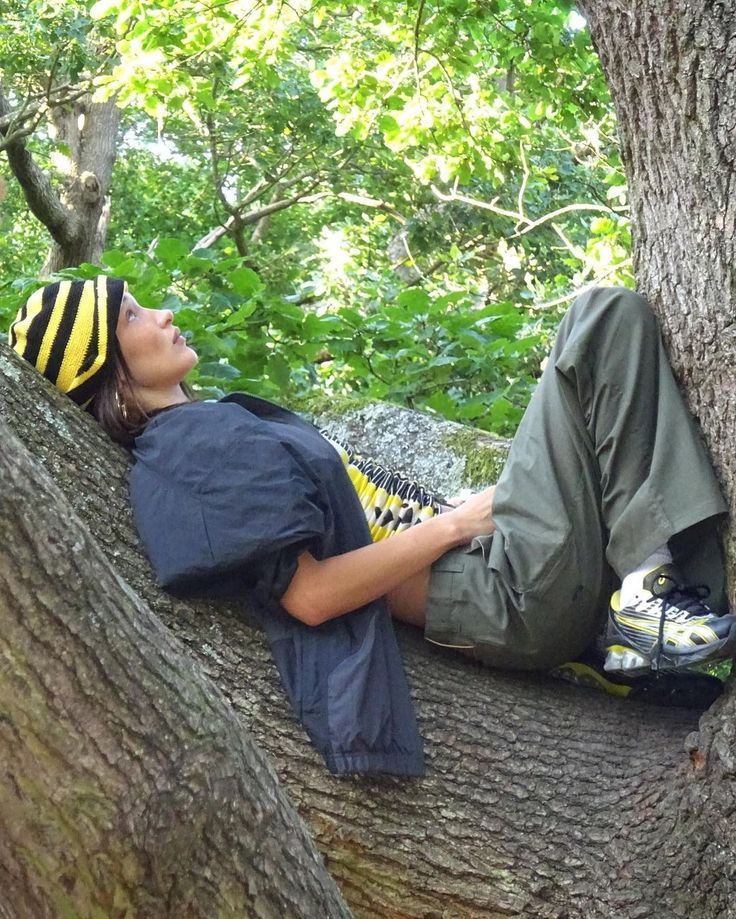
The greatest gift it offers isn't fitness; it's trust. Trust in your body, trust in your decisions, and trust in your ability to handle difficult things.
Sports teach lessons that have very little to do with sport itself. They teach leadership, resilience, courage, discipline, and self-belief. They teach girls how to take up space, make decisions, recover from failure, and move forward without waiting for permission. There is a reason so many female leaders identify as former athletes. Sport trains something much deeper than the body, and yet, what I value most about athleticism isn't any of those things. It's freedom.
The freedom of spending an hour without wondering how I am being perceived. The freedom of experiencing my body from the inside rather than the outside. The freedom of remembering that my body was never meant to be a lifelong project.
When I think about what sport has given me, it isn't stronger legs, better endurance, or improved fitness. It is something far more meaningful than that. Sports gave me back the relationship with my body that I had before the world taught me to monitor it.
Before I learned to compare it.
Before I learned to evaluate it.
Before I learned to see it through everybody else's eyes.
It reminded me of the little girl who ran simply because she could, who moved without self-consciousness, and who trusted her body without question. The older I get, the more I realise that athleticism is not my superpower because it makes me stronger, but it is my superpower because it helps me feel whole.


Comments