


.png)
We've Confused Sexual Freedom With Sexual Excess.
- Eloise Webb
- 5 minutes ago
- 4 min read
It may seem counterproductive to use Bonnie Blue’s name in the context of eroticism. When we think of the erotic, we picture the tease; the brush of skin that makes your hair stand on end. We do not picture a globally documented sex-fest in which one woman masochistically offers herself to a thousand men. She may be sexy in the sense that her activities relate to sex, but to call her content erotic in any meaningful sense would be a hilarious conflation.
And yet, here we are. Bonnie Blue broke the world record for the most sexual partners in a single day, 1,057 men in twelve hours, and the internet did what it does best: it lost its mind. The outrage was volcanic. But outrage is just prudishness wearing a political T-shirt. The more interesting question is not whether what she did was moral, but what it tells us about our own current state of desire.
Worldwide outrage was only made possible because it was filmed, monetised, and posted. That is what actually unsettles us, total visibility. The men were strangers. The millions watching were strangers. All of us were invited.
Blue inspired a Channel 4 documentary and triggered a parliamentary row that landed, with fitting irony, in the same week the UK’s Online Safety Act was instated.
By all means, call her a content extremist, but you have to recognise this: she couldn’t have done it without an audience. Bonnie Blue proclaims everything we are too prudish to say plainly: sex isn’t always sexy. Especially when it’s on tap.
Now, we need to set the record straight about a rather controversial statement circulating on TikTok: “Bonnie Blue is Gen Z’s Marina Abramovic.” Let's unpack this. Holding these two within any degree of proximity is culturally harmful. Abramovic made Rhythm 0 to expose a horrifying truth about humanity. Bonnie Blue took that horrifying truth, exploited it, and then celebrated both its online and physical perpetrators.
While I, a Gen Z-er, do revoke this statement wholeheartedly, there is definitely something to be said for the emotional aftermath we feel regarding both these women’s endeavours. So I want to extrapolate on this vague prosecution. Whilst Bonnie Blue capitalises on the very vice Abramovic highlights about human nature, there is one common denominator: Us.
No matter how much you might rebuke your power over both these performances, “Well, I don't claim her as a feminist”, or in the case of Rhythm 0, “Well, I would never have jabbed the poor woman with a kitchen utensil!”, you watched. So I hate to break it to you, but you, the viewer, the gossiper, the re-poster, are the accomplice on whom both these social experiments logically rely.
What this all boils down to is how we react to the things we see.
When the pornography industry began to surface in the backstreets of Soho in the 1960s, it did so under the surveillance of the law. If a film was seized and brought to trial under obscenity legislation, its creators were forced to argue that the work possessed artistic merit, that creativity, not mere titillation, was its driving force. Pornography had to be artistic in order to exist.
The first studio-made porn movies were actually some iteration of what we now call Art House. Raunchy, yes, but suggestive rather than conclusive. Their pleasure was grounded in a mystery that can only be produced by patience. By waiting a split second longer than necessary. That split second, right there, is where eroticism exists. The hanging, the hungry, the always wanting more.
This visual culture ignited the imaginations of the 20th-century’s great aesthetes. Picasso, Helmut Newton, Corinne Day, and Tom Ford were all guests at this candlelit dinner. They would turn in their graves knowing they accidentally paved the way for OnlyFans. When the nude was left in the hands of artists, it inspired fashion and art movements that shaped centuries to follow. But when placed in the hands of the internet, where censorship can be demolished by the click of an ‘I am 18+’ button, the erotic becomes an archaic term, used to describe the days of smoky rooms and the snap of suspenders.
Which raises the question: When did the lust for lust go awry? The moment we swapped sultry shadows for sterile studio lights.
The problem with digital desire is not simply its abundance but its clinical perfection, and I'm not only referring to the BBL epidemic. The contemporary image has been sanded smooth by filters and watered down by algorithmic taste. At a certain point, one begins to wonder whether we might as well photograph our Barbie dolls; at least they have the decency to admit they are made of plastic. And they never say “ouch”.
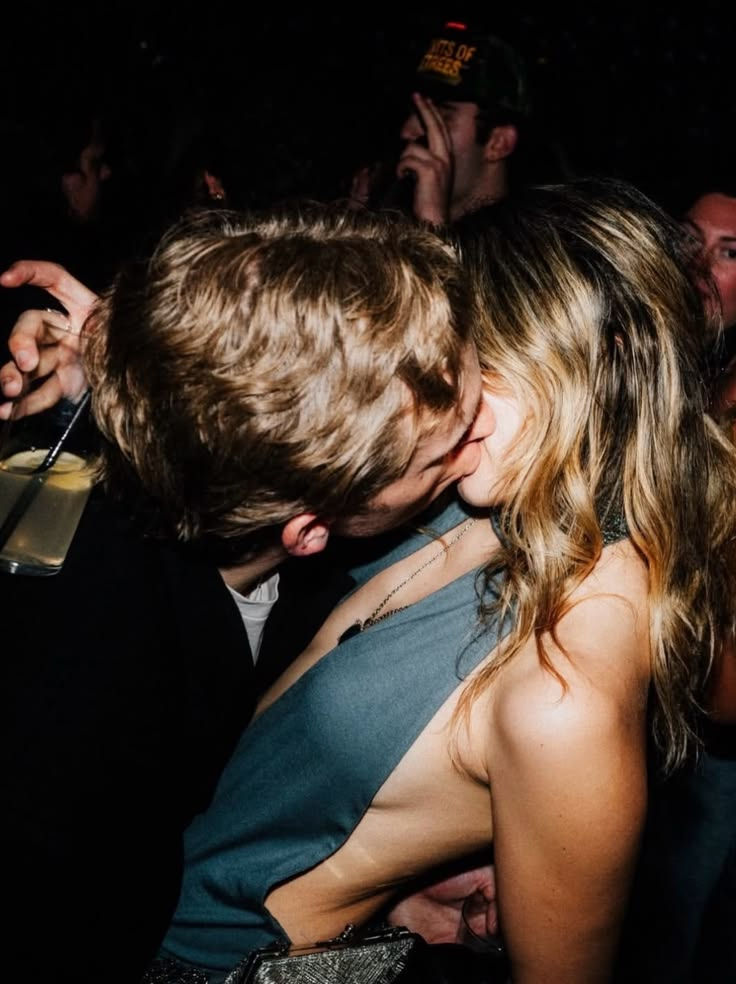
Eroticism was never about perfection. It lived, thrived, and survived in imbalance: in a gap-toothed smile, an unwashed white shirt, and the suggestion that something had just happened, or was indeed about to.
Instead, our digital age offers an image that is only half-cooked. Sex without seduction. Kink without plot. Lust without patience. Platforms reward clarity, immediacy, and endless output. Every upload is a victim of ubiquitous assimilation. Nothing is allowed to simmer.
AI-generated pornography has taken this further still, producing an endless, frictionless scroll of bodies that were never real, performing acts that no one chose, watched by people who feel nothing much afterwards. Most definitely, no remorse.
Perhaps now, more than ever, is the time for a new aesthetic to emerge, something that slips and slides off the polished surfaces of the internet entirely. If the algorithm produces perfection in vitro, then rebellion, with any luck, waits in the opposite direction.
The future of erotica may not be sleek at all. It may be chaotic, tactile, and perhaps even a little bit gross. But most importantly, it will be unapologetically human.
After two decades of frictionless imagery, let's rediscover the power of rough edges and unpredictability, of moments that look less like content and more like fragments of real life. Fleeting, imperfect, and resolutely anti-binary. If the world is being starved of artistic eroticism, let it be reborn, rising from the ashes like a sweaty phoenix.


Comments