


Being Unavailable Is the New Sexy.
From phone-free spaces to brands going offline, exclusivity is getting a Gen Z rebrand. Gatekeeping was once considered a cardinal sin of the internet. Remember when influencers would get called out for refusing to share where their clothes were from? Or when anyone who posted a beautiful restaurant without tagging the location was immediately accused of trying to keep it to themselves? The internet was supposed to democratise access. If you knew something good, the socially acceptable thing to do was share it.

Somewhere along the way, that instinct started to reverse. The Row banned phones from its runway show. Silicon Valley is suddenly obsessed with taste. Substack has built an entire ecosystem around writers charging readers for their individual perspectives, essentially asking people to pay for someone else to filter the internet for them. Even being difficult to find has acquired a certain appeal.
For years, exclusivity was treated as something inherently suspicious. Now, self-preservation is beginning to look like the ultimate luxury.
We used to find things by accident…
The early internet was messy in a way that is difficult to recreate now. You could stumble onto a blog through another blog, follow a comment thread somewhere completely unrelated, and end up in a strange corner of the web you had never intended to visit. Discovery felt accidental because, often, it actually was.
That unpredictability gave people the opportunity to develop taste without constantly being told what their taste should be.
Today, almost everything we encounter online has already been selected for us. Our feeds are built to optimise engagement, which means we are repeatedly shown variations of things we have already demonstrated we like. The result is a strange contradiction: we technically have access to more culture than any generation before us, yet everything increasingly feels the same.
The same outfits circulate between thousands of accounts. The same phrases enter everyone’s vocabulary at once. The same interior design references appear in apartments across continents. Even individuality comes with recognisable categories now. You can be a clean girl, a downtown girl, an old-money girl, or whichever identity the algorithm decides should be the next hit, but you are still choosing from a menu someone else has already created.
We have endless access to inspiration and increasingly fewer opportunities to arrive somewhere ourselves.
Even our discoveries have become identical.
Think about the last time you visited a new city. Chances are, you had already seen parts of it before you arrived. You saved the TikToks. You found the coffee shop everyone insists is a hidden gem, despite the queue stretching down the street. You ordered the pastry you had already watched twenty strangers cut open on camera. You stood at the exact viewpoint from which thousands of people had filmed the exact same sunset.
It is why cafés in New York, Mumbai, and Tokyo can somehow resemble one another. The same minimalist furniture, carefully imperfect ceramics, and photogenic pastries have travelled faster than any local aesthetic possibly could. What once signalled taste quickly becomes a template.
And the cycle moves brutally fast. Someone finds something interesting, posts it, and suddenly everyone wants access to it. Within months, it has been named, copied, commercialised, and exhausted. The fear of sharing something good online no longer seems quite as irrational when you know exactly what exposure can do to it.
Taste requires keeping something for yourself.
Maybe this is why gatekeeping is quietly being rehabilitated. Not the kind that exists to humiliate people or turn knowledge into a status game, but the simple decision that not everything needs to be distributed. Some restaurants can remain recommendations between friends. Some clothes do not need a link. Some experiences can happen without immediately becoming content.
The ability to discover something genuinely new and preserve it is becoming one of the few ways to build an identity that does not feel algorithmically assembled.
It also explains the growing appeal of living, at least partially, outside the feed. Gen Z is increasingly interested in phone-free spaces, physical magazines, private clubs, and brands that deliberately limit their digital presence. The attraction is not necessarily nostalgia for a world before technology. Most of us barely remember one. It is a desire to experience something before the internet tells us what it means.
Taste used to mean knowing what to choose. Increasingly, it might also mean knowing what not to share.
We are forgetting how to find things.
There is one uncomfortable problem with romanticising this return to discovery: most of us are losing our ability to actually do it.
We have become incredibly good at searching and surprisingly bad at wandering. Before choosing a restaurant, we check TikTok. Before buying something, we look for reviews. Before visiting a neighbourhood, we search for what is “worth it.” Even when we want spontaneity, we often research how to perform it correctly first.
The algorithm did not simply make discovery easier. It removed much of the discomfort that discovery requires: getting lost, choosing badly, wasting an afternoon somewhere mediocre, or forming an opinion before checking whether everyone else agrees.
Perhaps that is the real luxury now. Not secrecy for the sake of exclusivity, and not disappearing from the internet altogether, but having enough confidence in your own taste to encounter something without needing it to be validated first.
Because when everything is available to everyone, access stops being the thing that makes you interesting. What becomes rare is the ability to look at the same endless world as everyone else and still find something of your own.
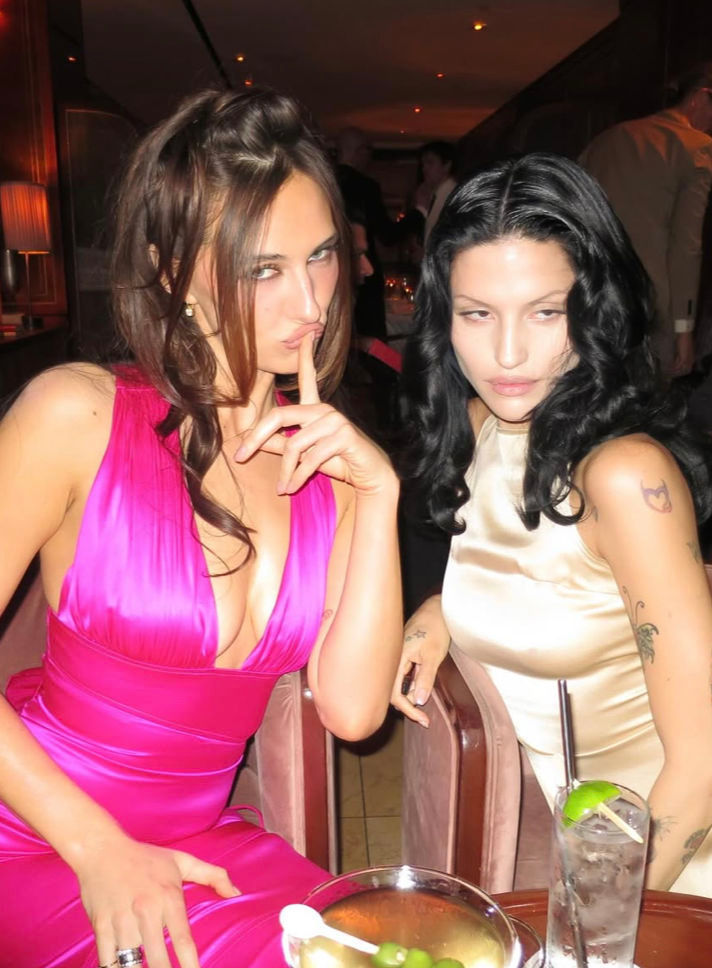
Photo © Laetitia Casta / Photographer unknown.




Comments