


.png)
I Got So Good at Being Likeable I Forgot to Have a Personality.
I can tell when someone is about to stop liking me. It isn't intuition. It's pattern recognition. A smile that arrives half a second too late. Someone typing "haha" instead of "hahaha," which marks, I've decided, the difference between being amused and being polite. A voice that flattens by some fraction when it says my name, as if my name had begun to cost something to say.
I know the shape of my own expiration date in someone else's attention. I don't know where they end and I begin.
I wasn't just paraphrasing conversations back to people. I was recording body language, micro-expressions, tonal shifts, filing them away like a person taking inventory of a building she isn't sure she's allowed to stay in.
Nobody ever explicitly told me I couldn't join. You just notice you're the one walking behind the group instead of inside it. Their hobbies became your homework. I thought I was discovering myself. Really, I was learning the quickest route into someone else's world. Some interests stayed. Some disappeared with the people I'd learnt them for. I can't always tell you which parts of me would've arrived anyway.
I have loved Barbie for as long as I can remember. I never hated the colour pink or the hyper-femininity of her, the plasticky optimism, a costume for every occasion. What I want to explain is what I did with her.
Nobody buys Barbie because of who she is. They buy her because she can become anyone.
Adaptability was never a side effect of Barbie. It was always the product.
I became that online without deciding to. Everyone's Barbie. Approachable. Easy. Never inconvenient. Nobody cast me. I built the role because it worked and forgot I had built it at all.
I don't think I ever wanted anyone to look past it. I had built this version of myself so carefully that it had become the thing I was proudest of. Looking past it would have meant finding something unfinished underneath.
I first heard Taylor Swift's "mirrorball" during lockdown, when the world had become small enough to fit inside my bedroom. I'd never been more alone, which should have meant I could stop performing.
Instead, I realised I'd brought the audience with me, still calibrating myself against imagined reactions.
I remember sitting on my bedroom floor, waiting for solitude to introduce me to myself. Instead, it revealed how much of me had been organised around other people's eyes.
The song wasn't telling me who I was. It had recognised me before I had.
Here is what nobody tells you about becoming fluent in other people: it doesn't feel like performance from the inside. It feels like care. I would adjust my voice half an octave without deciding to, laugh a beat earlier than the joke warranted because I had already read where the conversation wanted to go. I told myself this was generosity. If I'm honest, I was trying to make leaving me inconvenient.
I wasn't trying to be known.
I was trying to become difficult to replace.
I had learnt, too early to date precisely, that being wanted was safer than being loved. Wanted could be earned, renewed daily through small, useful acts. Loved felt like something you were simply given or not.
The strangest part is that being loved doesn't solve the problem. It complicates it. Because when someone tells me they love me, my first instinct isn't gratitude. It's curiosity. Which version?
Every relationship felt revocable. I behaved as though everyone was already halfway out the door, and my job was to delay the moment they walked through it. Saying no was almost impossible; no wasn't a boundary, it was a prediction. I mistook availability for kindness because the easiest way to keep a place in someone's life was to make sure they never had to work around yours.
Is people-pleasing manipulative?
The question embarrassed me long before it interested me.
I used to think the answer was obviously no because manipulation requires intention, and I only ever intended to be liked. But if you are constantly managing what another person feels, hiding your own disappointment so they don't have to feel guilty, the motive can be fear instead of control and the effect can still look the same.
I've started keeping a private list of all the people I've been. The daughter who doesn't worry anyone. The friend who types "I'm fine" before she's decided whether she is. The one who laughs first, so no one has to wonder whether the joke landed. The Barbie.
None of them are fake.
That's what makes this hard to write honestly. Each one began with something true about me, stretched to fit a room. I only have the edits.
There is no waiting original, only the residue of every room I was ever trying to survive.
Maybe a self isn't something you uncover. Maybe it's what finally has enough room to stay.
What's changed is that I finally know what I'm looking at when I catch myself mid-performance: the smile arriving on cue, myself agreeing before I've decided what I think. I used to mistake that for who I was. Now I recognise it as reflex.
Sometimes I still agree before I've finished listening to the question.
I still notice the smile arriving half a second late. I still hear the difference between haha and hahaha. The patterns never disappeared. They just went vestigial, present but no longer commanding. The difference is that I don't obey every pattern anymore.
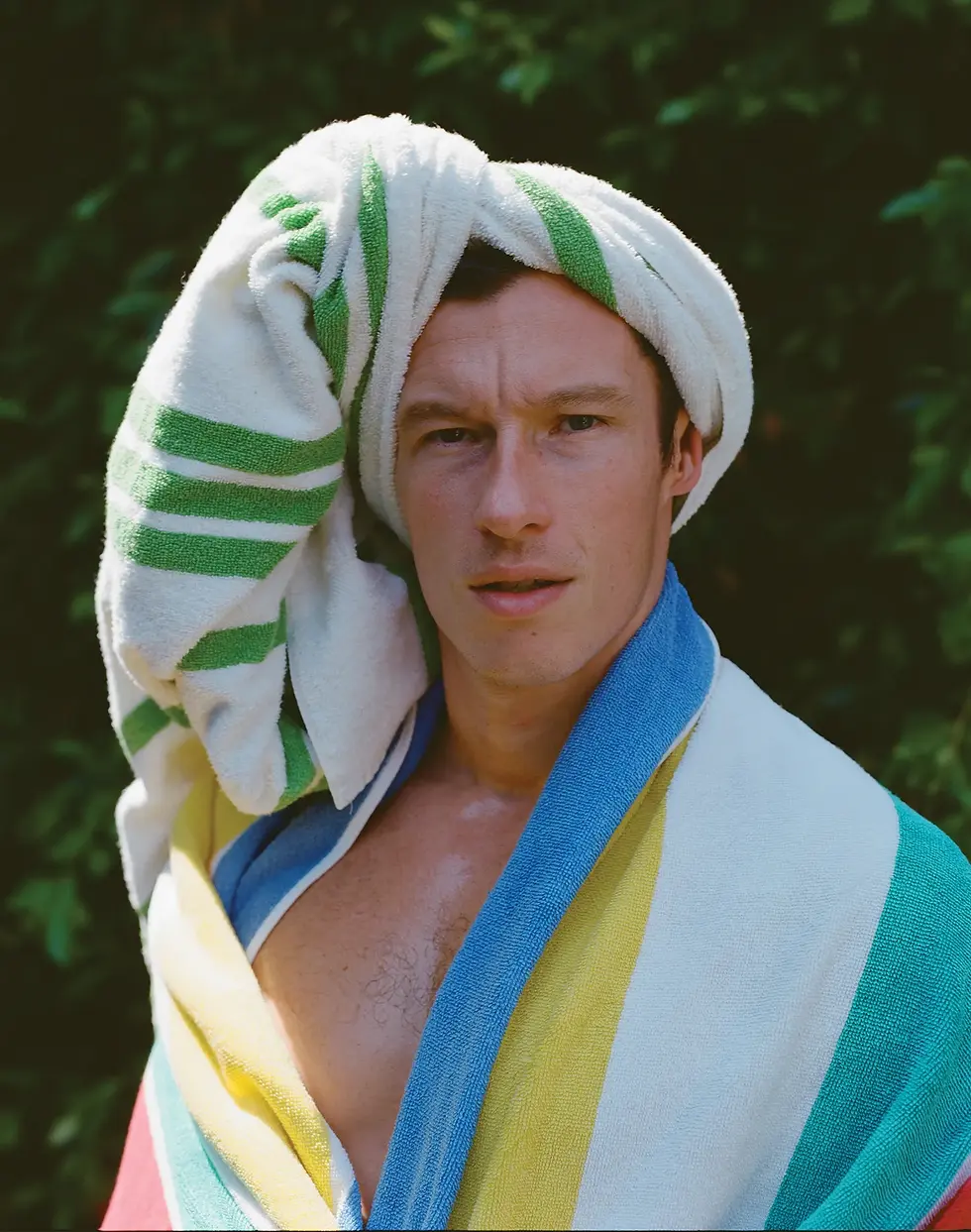
Photo © Callum Turner Photographed by Theo Wenner


Comments