


Everyone Wants a Powerful Woman Until She's More Powerful Than Him
For most of my life, I thought love worked like a promotion. The older I got, the more successful I became, the more I knew myself, the more beautiful and confident I felt, surely I would become more lovable too. There was always something else I could become, and I was strangely convinced that love was waiting for me at the finish line. So I kept becoming. I became more ambitious, more independent, more outspoken, more comfortable with myself. I thought I was building a better life, but somewhere along the way, I started treating myself like a project that needed to be completed before someone could finally choose me.
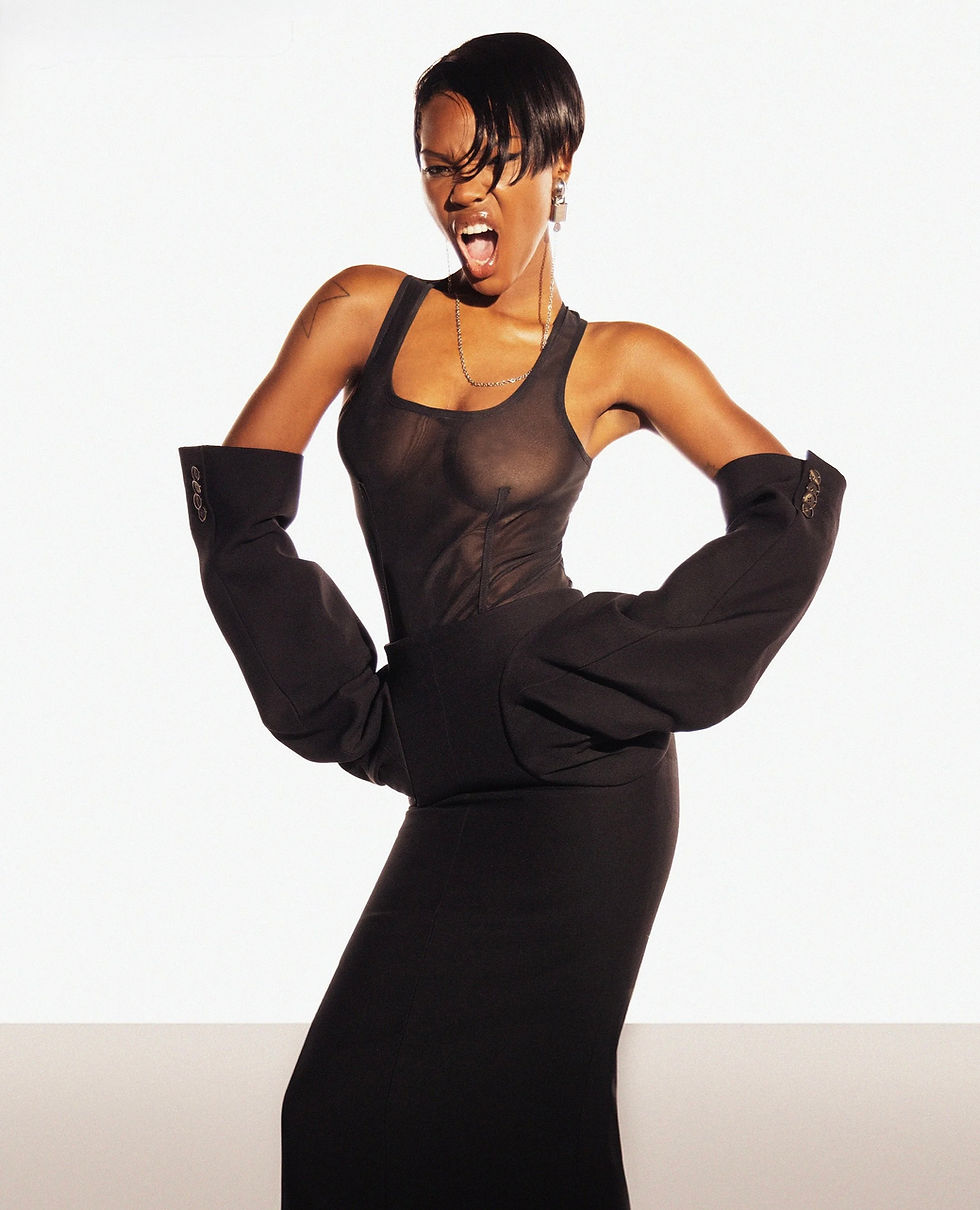
The funny part is that the closer I got to becoming myself, the less interested some men seemed to be in actually knowing me. They liked my ambition until it made them feel smaller. They liked my confidence until I stopped looking for their approval. They liked the idea of a powerful woman until they realised she might actually be more powerful than them. And that was when I started asking myself a question I probably should have asked much earlier: did they actually love me, or did they just love the idea of being the man who could have me?
As the years went by, I started noticing a pattern in the men I dated. They weren't always interested in all of me. They were interested in the parts of me they admired, or the parts they thought they could get something from. Sometimes it was sex. Sometimes it was a date, attention, access, information, a connection or simply the satisfaction of getting close to a woman they found impressive. I started wondering how often attraction was actually about the person in front of you, and how often it was about what that person could give you.
It took me years to realise that sometimes, a man doesn't even need to know you to decide he wants you. Sometimes, the wanting comes first, and getting to know you was never really part of the plan.
I remember a guy from college who kept asking me out, despite the fact that I had never given him much reason to believe I was interested. What I couldn't understand was that almost all of his closest friends had asked me out before him. I eventually asked him why that didn't seem to bother him. His answer was, “May the best man win.” He said he wasn't going to stop.
I remember thinking: win what, exactly? Me?
And this isn't a story about me being so irresistible that every man wanted me. That's not the point. The disturbing part is how little it took for me to become something to be competed over. None of these men actually knew me. They had barely spoken to me. They didn't know what I believed, what I wanted or whether I wanted them at all. And yet, somehow, my lack of interest didn't end the competition. It became an obstacle to overcome.
That's where the metaphor stops being harmless. You can't “win” a person who hasn't agreed to play. Once my no becomes something to outlast, persuade or overcome, we're no longer talking about attraction. We're talking about entitlement.
They weren't responding to who I was. They were competing over an image of me they had created in their heads. They hadn't met me. They had met the fantasy.
And maybe that's what bothered me most about his answer. He wasn't trying to know me. He was trying to beat other men to me. The competition didn't require my participation. My consent wasn't one of the rules. And somehow, that was the part everyone seemed to forget.
The older I get, the more I realise this wasn't some isolated college-boy mentality. I've seen the same logic play out in relationships, too: men treating another man's interest in a woman as a reason to want her more, as if desire becomes more legitimate when there's something to compete for.
My ex was probably the clearest example, and probably the only man in my life I'm still embarrassed to have dated. When we first met, he was with his girlfriend, and honestly, they looked cute together. There was no cheating or anything remotely like it. I respected her then, and I still do. Neither of us was interested in the other. I was actually flirting with someone else: his best friend and, more specifically, his former business partner. So when they broke up, it didn't change anything for me. I hadn't been waiting for him to become available, and his relationship status had never been the reason I wasn't interested in him.
But apparently, my lack of interest wasn't enough to end the story for him. Despite knowing I had been flirting with his best friend, and despite me rejecting him more times than I can comfortably count, he kept coming back. For two years, he found reasons to text me, flirt with me and somehow insert himself into my life. What I didn't know at the time was that he was also calling our mutual friends, trying to find out what was happening in my life without me knowing. He wanted information, access, a way in. And somehow, the fact that I kept saying no only seemed to make him more determined.
At the time, I thought it was persistence. Looking back, I realise it was something else entirely. It took me almost three years to understand why he had wanted me so badly.
When my chronic illness began, I was at the most vulnerable point in my life. There was no better version of me waiting around the corner because, for the first time, I wasn't even myself. I was scared, lonely, sick and trying to understand what was happening to my own body. And he knew it. He knew that if he approached me then, he might finally have a chance.
And he used it.
He didn't fall in love with my vulnerability. He saw an opening. I found out much later that when we started talking, he was calling his male friends, telling them about me, almost like he had won something. Which was especially strange because there were two things about me he knew very well: I wasn't actually interested in him, and I didn't want a relationship.
But apparently, neither of those things was an answer. They were obstacles.
I've noticed that whenever you tell a man you don't want him, or that you don't want a relationship, there is a certain type of man who immediately tells you he can change your mind. He can fix you. He can make you fall for him. He can be the one who finally gets through to you. Somehow, your “no” becomes a challenge to his ability to win.
Apparently, some men hear “no” and translate it as “try harder.”
But I'm a person. I'm not a status to be won or a competition for you to feed your ego. And who exactly told you I wanted to be fixed?
Somehow, I ended up in a relationship I had never wanted in the first place. I had been clear from day one: I wasn't looking for a relationship, and I didn't know if I ever would be. He told me he would accept me as I was, especially while I was sick. He told me he would wait. He told me he would make me fall in love with him eventually, as if my feelings were just another thing he could outlast.
And then he told me something that should have been a red flag, but at the time I heard it as romance: the fact that I wasn't obsessed with him was exactly what attracted him to me. My indifference made me more desirable. My distance made him want me more.
Which made me wonder: when did a woman not needing you become the most attractive thing about her? When did my vulnerability become an opportunity, my independence become a challenge and my lack of feelings become something a man wanted to conquer?
I wasn't falling in love with him. He was falling in love with the idea of making me.
Once I understood that, the rest of the relationship started making sense. What I had mistaken for persistence was really a need to prove that he could get through to me, that my resistance was something he could eventually overcome.
The love-bombing, the intensity, the feeling that you had finally found someone who saw you in a way no one else had: the whole performance. Except there was one problem: it didn't work on me for very long.
I was too busy trying to get better to be manipulated by him. The more he realised he couldn't get through to me, the harder he tried to convince me, love-bomb me and make me fall for him, and he mistook that obsession for love.
As I started healing, I started coming back to myself. And the woman I came back to was not particularly convenient. I was opinionated. I was loud. I argued when I thought something was wrong. I left when I felt disrespected. I didn't need a man to validate me, and apparently, that was less charming once he realised I actually meant it.
A man once told me that if I kept making it so obvious that I didn't need men, I would end up alone for the rest of my life. I remember asking him, genuinely, “Why?” His answer was basically a list of everything that apparently made me difficult to love: I was too loud, too independent, too modern, too opinionated. I had my own friends, my own career, my own ideas about how I wanted to live. In his mind, a woman having a life that didn't require a man left very little for a man to do.
I didn't believe him. At least I didn't want to. But as I got older, I started hearing versions of the same thing from men I dated. Different men, different lives, different personalities, yet somehow the verdict kept sounding the same.
I was too much.
Funny how “too much” always seems to mean “more than I know how to handle.”
And for a while, I wondered if they were right. Not because I thought there was something wrong with me, but because I couldn't understand why being exactly the woman I had worked so hard to become seemed to make me harder to love.
But if not needing a man was supposedly the biggest obstacle to being loved, I had to ask myself: why?
When I first started therapy, I told my therapist about my ex. He listened to everything and then asked me a question that I still haven't completely got over: “Why are you with someone who keeps trying to make you smaller, thinks he loves you, but actually wants to be you?”
At first, I didn't understand what he meant. Then I started looking at the relationship differently. I had styled him. I had helped with his social media. I had curated his image, introduced him to people and even helped him get connected with his manager. I had spent so much time trying to make him someone I could see myself with that I hadn't noticed he was studying me in return: how I spoke, how I dressed, how I moved through the world, how I built things, what made people listen to me.
I thought I was trying to make him fit into my world.
He was trying to figure out how to recreate mine.
And suddenly, the relationship looked very different.
I thought he loved me. But he did not like me. He wanted to be me.
Maybe that's also why I've become so suspicious of the way we talk about powerful women. Men can be very attracted to a woman's power when it exists at a comfortable distance. They see that she's successful, makes her own money, has a life of her own, and suddenly she's fascinating. Until they realise that the same things they admired mean she doesn't need them for any of it.
Power is sexy until it stops being decorative.
Everyone wants a powerful woman until she's more powerful than him.
I was reminded of this recently when I went on a date with a guy I'd been talking to on and off for months. Everything about me is pretty much public knowledge. I write, I have my own business, I'm extroverted, ambitious, opinionated. None of this was exactly a secret. Yet the entire car ride was spent listening to him explain that the woman he wanted didn't have any of these qualities.
I kept thinking, then why are you here? Then he asked me, “What's it like being this successful? What's it like making your own money?" And suddenly, it made sense.
He didn't want me. He wanted the woman he'd imagined me to be.
And there it was again: too much, too cool, too bold, too sharp. One man actually told me that if he kept seeing me, he would eventually become jealous of me. As if my existence were some kind of threat he was generously warning me about.
But here's the part that bothers me. I don't care if I'm too much for you. Go find less. Truly. My problem isn't that I'm too much. It's the assumption that because I'm too much for you, I must therefore be too much to love.
Who said I wanted to be loved by becoming less of myself?
Because that's the trap. When we reshape ourselves to be more lovable, we may get loved, but we don't necessarily get loved for who we are. We get loved for how well we've managed to fit the shape someone else wanted.
And what's even stranger is that before these men decided I was too much, they were usually the first ones to tell me how warm I was. How easy I was to talk to. How affectionate, funny, sweet and open I was. It was only after they realised I was stronger than they expected that those same qualities suddenly became questionable. Apparently, a woman can be warm as long as she isn't powerful. She can be confident as long as she isn't intimidating. She can have a voice as long as it doesn't speak over his.
They don't mind a woman with a voice. They mind when she uses it.
But being powerful doesn't make a woman less soft. We don't get our power from being incapable of loving people. We get it from the world we've built inside ourselves, and the one we know we can build outside of it. I can be kind. I can be affectionate. I can make you feel like the most loved man in the room. But none of that comes at the expense of my self-respect. I can love you deeply and still choose myself. I can adore you and still leave. I can be soft without becoming small.
Softness is not submission. Kindness is not obedience.
I'd rather be free than loved for someone I'm not. I'm not interested in being softened, fixed or domesticated into someone easier to love. I spent years trying to become the kind of woman a man could love. Now I know exactly what kind of woman I want to be: the kind he can't domesticate. I'm a woman. Not a fucking house cat.
Photo © Quenlin Blackwell Photographed by Thom Kerr for Wonderland Magazine 2024.





love her and her essays
HEHEHHEHE BOLD