


We Wanted Y2K Fashion. Not Y2K Eating Disorders.
Just like any other member of Gen Z, thanks to a social media diet of BetterHelp ads and trigger warnings, I am pretty fluent in therapy speak. So the other night, while watching a Netflix documentary on Ozempic, I found myself thinking about how the return of 2000s fashion, coinciding with a renewed obsession with skinniness, felt like too much of a coincidence, especially given how much skinniness dominated that era the first time around.

The more I looked into it, the more convinced I became that we're currently locked into some kind of generational trauma inherited from the trend cycle landing on Y2K fashion. Almost as if the trend cycle didn't just bring back the low-rise jeans of the early 2000s, but the body image issues too. Almost as if, with a time machine, our current cultural climate would look eerily similar to that of the early 2000s.
It's common knowledge that fashion moves in cycles of roughly twenty years. Twenty years is the sort of sweet spot for nostalgia. What felt cool ten years ago still feels cringey because it's still haunting us daily in our Snapchat Memories. It's too recent to earn its rose tint just yet, given that most of it is still being desperately flogged on Vinted.
And what felt cool thirty years ago feels too inaccessible and unrelatable, more like a costume than a style identity we can fully embody.
So twenty years is the sweet spot, which, in 2026, puts us in the era of the early 2000s. Not exactly breaking news. We've been seeing torso queen Tyla exclusively in low-rise for a few years now, and Y2K is the go-to SEO keyword for Depop resellers, so we know it's happening.
However, the part we're less aware of is that we're not just inheriting a style of clothing each time fashion cycles back. We're inheriting a lot more than that.
Each time fashion cycles back, people reach for the references from that time: paparazzi photos, iconic moments. Right now, that means we're pulling from cultural moments that happened during a period that idealised thinness.
The 2000s were an insane time for diet culture. Reporters were sending photos of celebrities to doctors to estimate their weight, and editors were using bright red marker circles to point out cellulite and stretch marks.
For God's sake, Britney Spears was called fat.
And the glorification of skinny culture wasn't just perpetuated by magazines; it was perpetuated through cinema, constantly associating female attractiveness with negative emotions around weight gain.
For example, in Mean Girls, the moment that truly breaks the infamously beautiful Regina George is when she realises she's gained weight and spirals into a fit of rage.
Similarly, in Clueless, Cher orders a Caesar salad with dressing on the side, but keeps fussing over the details and eventually settles on a side of lemon wedges. Both scenes do the same job of treating food anxiety as part of idealised femininity, something the prettiest, most popular girl is supposed to perform.
And sure, you could argue it's played as a joke, a hyperbolic bit of pop culture commentary on the absurdity of diet culture at the time, not a sincere endorsement of it. But a joke only lands if it's built on something the audience already half-believes is true, which means the comedy doesn't undercut the ideal; it reinforces it.
By caricaturing the anxiety around staying thin in its most attractive onscreen women, early 2000s pop culture didn't just link thinness to attractiveness. It made food anxiety ‘cute’ and ‘diva’. There's an eerily similar ideal floating around on TikTok right now that's essentially the same thing, just inverted.
The trend is ‘things that make me feel fat’, and the overwhelming majority of what people put on that list pertains to hygiene: greasy hair, being sweaty, things that are generally agreed to be unattractive.
By associating unattractive traits with being fat, we're perpetuating the exact same ideal from the early 2000s through almost exactly the same mechanism.
That mechanism is the idea that the sexiest trait you can have is food anxiety.Essentially, the message is that in 2026, Aphrodite would be on Ozempic.Now, of course, no discussion of diet culture in 2026 would be complete without Ozempic, and what's extremely telling is the timing of its arrival.
Low-rise jeans, arguably the epitome of 2000s fashion, were already being talked about as a returning trend as far back as 2017, and by late 2022, the defining element of the era had been spotted on all our favourite It girls: Zoë Kravitz, Bella Hadid and Kate Middleton.
So basically everyone and their mum, including the future King of England's, was wearing low-rise.
With the Y2K fashion revival came the body image issues too, and less than two years later, Google searches for Ozempic peaked, in an eerie echo of how ephedra-based diet pills were all the rage back in the early 2000s.
And if you're still not fully convinced we're living in an early-2000s time warp, the beauty industry is still responding to diet culture by offering up treat-scented products as the poor man's version of whatever the rich are taking to suppress their appetites.
In the early 2000s, Jessica Simpson had a beauty line called Dessert Treats. In 2026, we have TikTok bundles of cookie-scented shower gels and scrubs.
So while your favourite celebrity is suppressing her appetite with a GLP-1, you can suppress yours by smelling your doughnut-flavoured wrist!
So it seems evident that fashion trend cycles aren't just a portal to an old silhouette; they're a portal to the entire cultural landscape that silhouette came from.
Fashion doesn't just recycle a shape. It recycles the exact images that shape first showed up in: paparazzi shots, film stills and tabloid spreads. And whatever body was considered normal in those images comes back stitched into the trend, whether we realise it or not. It's human nature to draw on the things we enjoyed in our formative years. That's why we call them formative.
Moving forward, we will, as every generation before us has, draw on the things that formed our tastes and express them through our own lens. However, we need to be conscious of exactly what we're absorbing when we follow fashion trends. To put it plainly: keep the low-rise, but throw out the complimentary generational trauma.
Because in the case of the sisterhood of the time-travelling low-rise pants, from the early 2000s all the way up to 2026, it seems like we're inheriting more than just an aesthetic. And if there's one thing the clean girl wellness era left us with, it's the ability to shadow journal about our generational trauma.
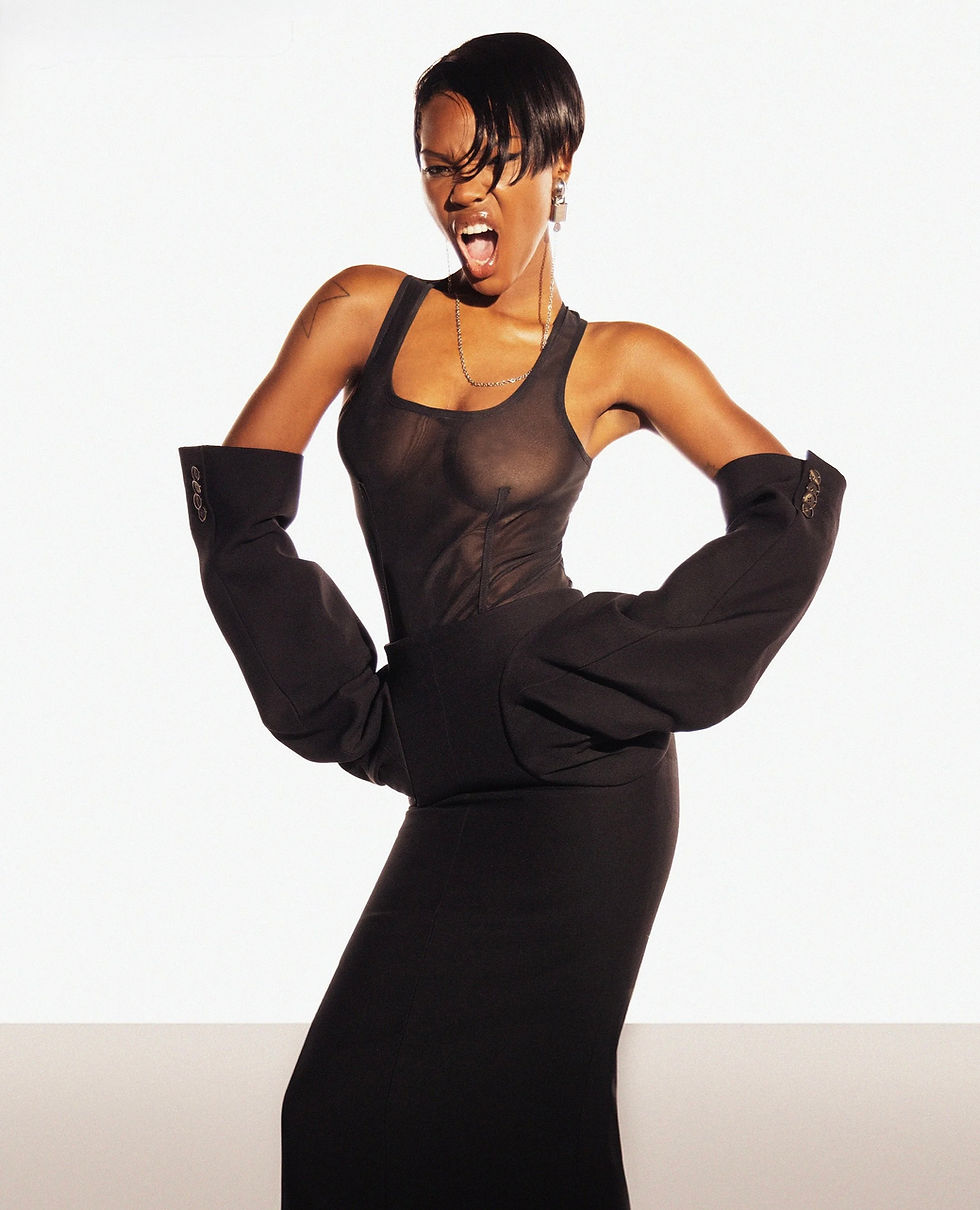
Photo © Kate Moss Photographed by Terry Richardson for Harpers Bazaar US 1998.





Comments