


.png)
Your Dating Type Might Be the Reason You’re Still Single.

I used to want a man who could sweep me off my feet: tall, six-pack abs, killer jawline, the whole white-horse fantasy. And of course, I had standards, or rather, a meticulously curated checklist I’d probably written long before I knew anything about love. He had to be smart, ambitious, financially stable, emotionally intelligent, and somehow still effortlessly cool. Back then, I could describe my dream man in obsessive detail, right down to the brand of his tailored suit, genuinely convinced he’d walk into my life before my twenties ran out and the rest of the story would simply write itself.
What I didn't realize then was that the checklist was never really the point. I thought I was choosing a type. I had no idea my nervous system had been choosing one long before I ever did.
And for a long time, I waited for that exact script to play out. Spoiler alert: nobody is coming to save you. Somewhere between my early twenties, real life, and a few humbling lessons, I realized I didn’t need a savior. I became my own damn white horse. I thought healing would change my standards. It didn't. It changed the part of me that was choosing them.
Still, God forbid a woman has a type. I certainly do. A certain mindset. A certain ambition. A certain aesthetic. My friends could probably recite the blueprint from memory.
Here's where it gets embarrassing. Five months into being single, and two years into therapy, I started noticing a pattern. I kept meeting men who looked exactly like my type. They checked every box I'd spent years perfecting. And yet? I ended every single one of those stories before the third date.
That's when it hit me: I hadn't outgrown my type. My nervous system had. The men hadn't changed. The part of me that confused familiarity with compatibility had. Every. Single. One. Here's the plot twist: I spent years curating a type, only to realize the checklist was never the point. The job title, the jawline, the tailored suits, they were never going to tell me whether someone could communicate, self-reflect, or stay emotionally present when things got hard.
White horses and empty heads make great mood boards. They don't make great partners. I didn't spend two years in therapy just to date another project. A few years ago, I would've fallen for every single one of those men without hesitation.
This time, something felt different. They hadn't changed. I had.
Healing has a funny side effect nobody warns you about. It doesn't just help you move on; it rewires what feels familiar. And once the familiar stops feeling like home, your dating life gets surprisingly inconvenient.
Your nervous system has a dating type long before your brain ever does.
For the longest time, I mistook dysregulation for chemistry. Unpredictability felt like excitement, emotional distance felt like mystery, and inconsistency felt like a puzzle I was meant to solve. The butterflies weren't attraction at all. They were familiarity. My body wasn't saying, He's exciting. It was saying, I've been here before.
Then the butterflies disappeared. At first, I thought something was wrong with me. I wondered if I'd become too picky, too guarded, or simply incapable of feeling anything. But the truth was much simpler: I wasn't anxious anymore. The bar didn't get higher; it got clearer. The checklist was never wrong. It was just incomplete.
Charm gets you the first date. Looks might get you the second. But neither will carry a relationship through the first difficult conversation. The older I get, the less I care about what a man has and the more I care about what he can hold: discomfort, accountability, conflict, vulnerability, and the emotional maturity to stay in the room when things stop being easy.
We spend so much time asking, What's your type? Blonde? Brunette? Finance? Creative? Tall? Funny?
Almost nobody asks the more interesting question: Who taught you that this feels like love?
Nobody is born believing love has to be confusing to be real. We learn it. We absorb it from the relationships we witness, the stories we romanticize, and the versions of love that reward longing over security. Through movies that confuse jealousy with passion, dating advice that mistakes inconsistency for mystery, and stories that teach us love is something to earn instead of something that should feel safe. Long before we consciously choose a partner, our nervous system has already learned what feels familiar enough to call chemistry.
Maybe that's why healing doesn't give you a new type. It teaches you to stop mistaking familiarity for compatibility, anxiety for chemistry, and emotional unavailability for depth. Your standards don't necessarily get higher; they get clearer. The people don't change. The part of you choosing them does.
Maybe that's why every man I'd met lately looked perfect on paper and left me feeling absolutely nothing. They weren't necessarily the wrong men; they were simply right for a version of me that no longer existed. For years, I thought I had a dating type. What I actually had was a survival type: a nervous system trained to mistake unpredictability for excitement and emotional distance for depth.
Healing didn't give me a new type. It dismantled the one I'd been unconsciously rehearsing. It taught me that chemistry without safety is just adrenaline with good lighting, and that peace isn't the absence of passion; it's the absence of survival mode. The biggest plot twist wasn't that better men suddenly appeared. It was that the old ones stopped feeling like home.
And if healing changes what feels like chemistry, how do you know you've ever actually been in love, and not just in survival mode?
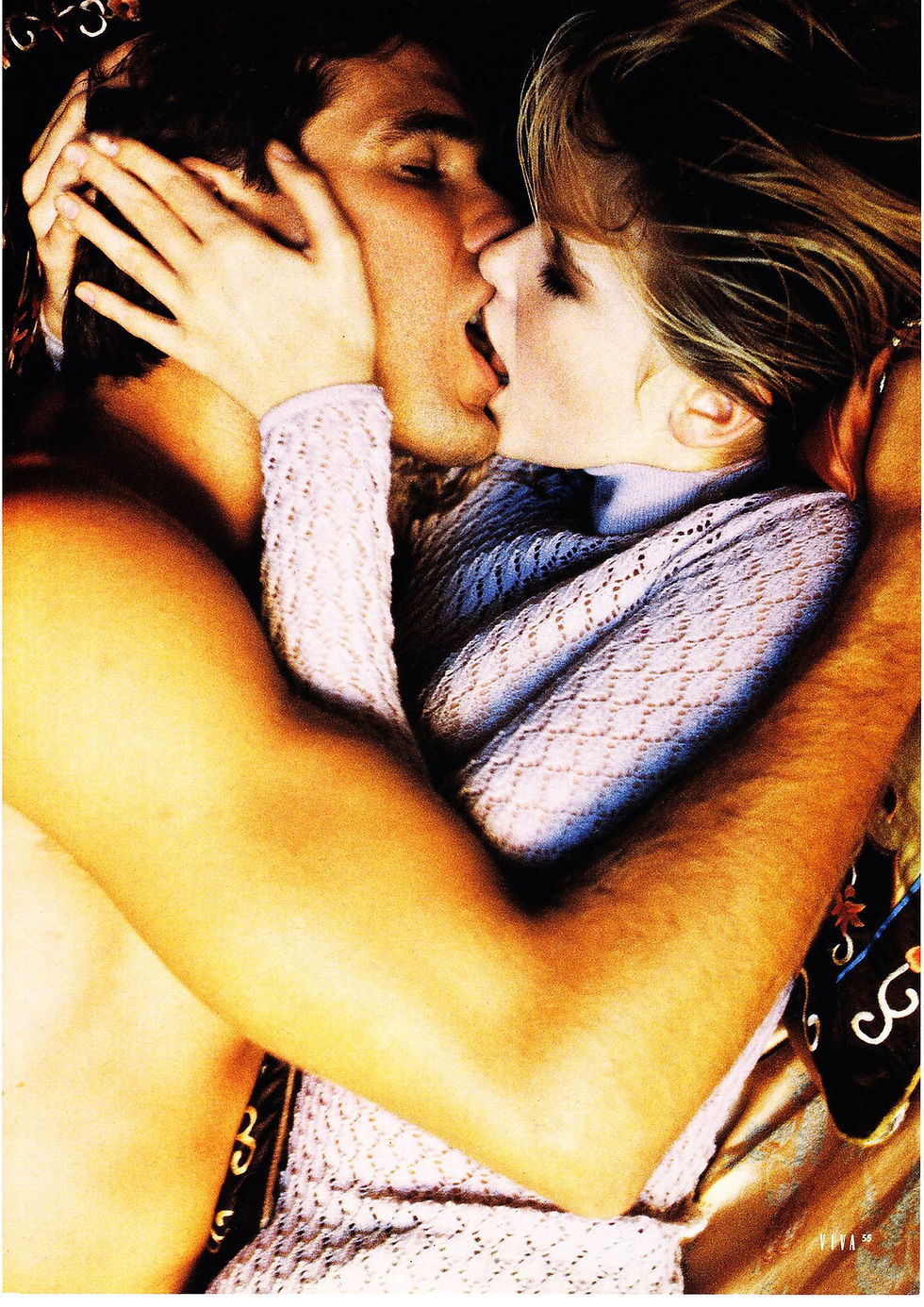
Photo © Photography via Pinterest (@Pinterest)



Again and again so good