


.png)
Of Course Most Women Fake Orgasms. We Never Outgrew the Shame of Sexual Desire.
As adolescents, women are introduced to sex from a very male-centric perspective. It is a world that we will partake in for the rest of our lives but, for some reason, never fully belong to. Sexuality was almost a costume that was given to us from time to time to serve the desires of the male gaze, but we were never really allowed to wear it long enough to understand what it meant. Or what it felt like to us, not to them. Sexuality seemed to inherently belong to men, and it was occasionally loaned to us when we fit the part. But any effort to actually claim, own or identify with it was stigmatised as wrong and out of order.
So much so that I know a staggering number of women in their 20s who all grew up believing that masturbation and female sexual expression were some sort of perverted sin. Funnily enough, a lot of women describe their sexual awakenings as a heavy secret they were prepared to take to the grave. It has become a canon event in female circles to look back and laugh about when we were younger and thought we were a ‘freak’ or some sort of anomaly for experiencing sexual desire.
And sure enough, in the present, there is a sense of relief, comfort and community that comes with the revelation that we were, in fact, not on our own. But social phenomena, such as how so many women continue to fake orgasms, highlight why it is important to consider the effect that years of sexual repression and shame have on adult female identities.
The truth is, in adolescent male circles, it was so normal to talk about sexual longing, almost too normal, to the point where it bordered on objectification. But with men, sexuality was so seamlessly integrated into their identity that it was almost as if sexual expression effortlessly complemented masculinity and verified its existence.
To adolescent men, masturbation isn’t so much an act as it is a routine, a norm, a way of life. For women, it was the opposite. As adolescents, sexual expression was so incompatible with femininity that it almost contradicted it completely or severed our sense of belonging to our gender identity.
Within our patriarchal society, young women are forced into two polarising archetypes: a Virgin Mary prude who knows nothing about female anatomy or a promiscuous slut who knows “too much” and does “too much”.
Growing up, there was never a safe space or an established middle ground where we could even have a conversation about our bodies or how things were changing. I mean, it is quite strange that young women don’t have existing spaces to discuss sexual self-expression because we quite literally talk about everything else.
But for some reason, female sexuality has been so appropriated by men for so long that it never feels like there’s enough room for us to enter the conversation. And this doesn’t just alienate us from our own bodies, but from each other as well.
The male perspective on female sexual expression has strategically pitted us against each other to the point that we collectively reinforce misogyny as a way of escaping shame. Words like ‘slut’, ‘whore’ and ‘hoe’ are the systemic weaponry born from this culture of stigmatisation, where you must either shame or be shamed.
In fact, I’ve lost count of the number of times I had to play dumb as a teenager and pretend that I was incapable of experiencing desire without the guidance of a man.
And this is why we fake orgasms, because we haven’t stopped performing. We pretend not to know sexual desire as an act of survival, to avoid stigma and shame, and consequently, we quietly carry this act of performing right into adulthood. And we do grow up, but we don’t outgrow the shame.
Sex has never felt very real to us because the authenticity of female sexual experiences is unfortunately marred by a lack of individuality. All the alienation and avoidance lead to this chasm in self-expression, which naturally creates a huge gap in knowledge.
And how can we be autonomous or exercise agency during this all-consuming act if we are systematically denied our own ways of knowing?
For men, sexual exploration is this exciting rite of passage. Where else does the phrase ‘sow your wild oats’ originate from? Sexual freedom is freely granted to you on the sole premise that you are, in fact, a man.
But for young women growing up, sex is weaponised against us as a cautionary tale. I mean, where else does the phrase ‘a fallen woman’ originate from?
Granted, times are changing, and women like Madonna, Sarah Jessica Parker and Megan Thee Stallion have shown society that female sexual liberation and empowerment can go hand in hand.
Female sexuality is almost always a topic of discussion in popular culture and the media. We constantly discuss and debate the lines between empowerment and entrapment. And in today’s digital media world, sex continues to sell; there is no shortage of topics, phenomena, trends or issues.
But large-scale visibility doesn’t always translate to personal autonomy or liberty. There is still a significant amount of shame that continues to quietly shape many women’s sexual experiences.
Perhaps we need to examine sexual repression at the grassroots level of adolescence, a time when identity-building is so foundational, and start fostering dialogue, accessibility and a sense of community among young women.
Ultimately, sex can be one of the most freeing, authentic and empowering experiences for a woman, but it cannot be if you are taught that sexuality exists merely to serve a man’s idea of it.
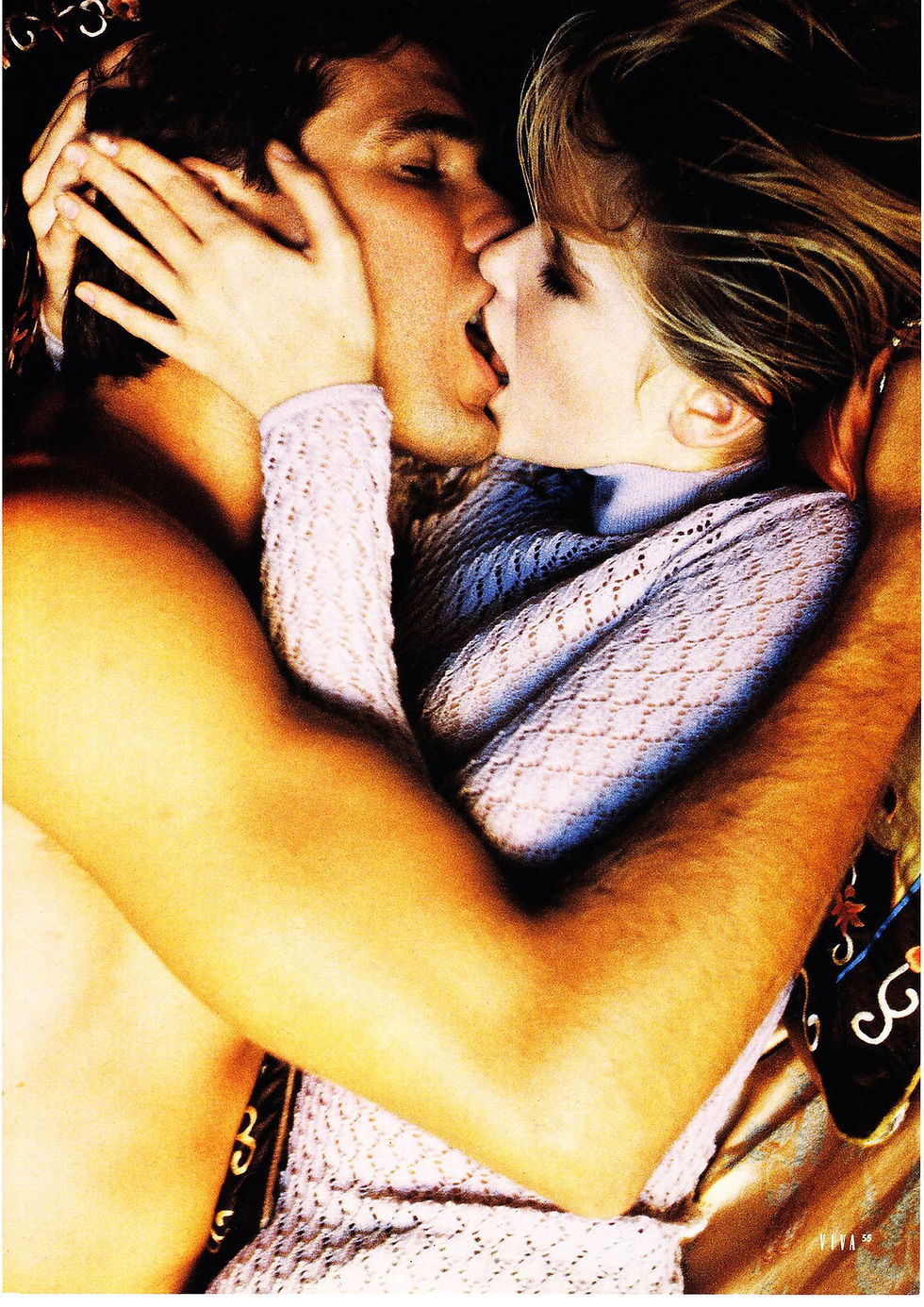
Photo © Claudia Schiffer photographed by Christian Wiggert for Viva Germany.




Comments