


.png)
Furkan Çetin Isn’t Chasing “Content”, He’s Building Cinema, One Sleepless Night at a Time
- Camille Roe S.

- Feb 6
- 6 min read

Photography by Pascal Behring & Paolo Fiore
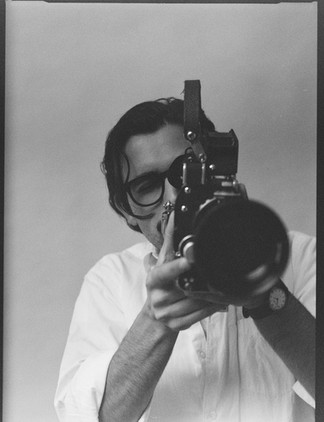
Furkan Çetin doesn’t speak like someone waiting to be picked. He speaks like someone already on set; mentally blocking scenes, hearing dialogue, feeling the light before it exists. At just 23, the Berlin-based director and screenwriter has built a body of work that reads far older than his age: emotionally precise, visually controlled, and anchored in the kind of quiet human tension you don’t scroll past, I can proudly say from evidence.
On Instagram, he keeps it simple: film director, Berlin // NYC, a split life that mirrors his split ambition. Berlin is the base. New York is the pull. For Roe’s January Coverstar, we spoke with Furkan about the long game: why he moved from stills to film, how an Armanii spot helped crack the commercial world, and why the happiest he ever looks is when he’s making narrative work that no brand asked for.
From “Safe Paths” to Storytelling
Furkan grew up in Berlin in a Turkish household, the kind of environment where stability isn’t a preference, it’s an expectation. School mattered. A “real” job mattered. And creative careers often sounded like hobbies people outgrow.
Before he ever held a camera, his life was structured around performance and precision: table tennis, eight years deep, pushed by a father who believed discipline could become destiny. Later came programming, not because he wanted to sit behind code forever, but because building worlds (games, systems, logic) felt like another way to tell stories.
Then, at 14, the camera arrived, and everything snapped into focus. Photography wasn’t a detour. It was the first medium that made the internal movie in his head feel real. He didn’t go to film school. He didn’t “wait until he was ready.” He started working, freelancing, and aiming straight for fashion photography. Until film found him faster than expected.
The Pivot: Music Videos, Then Narrative
By 2020/2021, Furkan was directing music videos for German artists; work that taught him speed, production pressure, and visual language. But music videos, for him, were never the end goal. They were the bridge.
Through that world, he met Tony Özkan, a creative partner who would become central to his evolution. Together they moved from images to moving stories, building short films that felt like proof-of-life for the kind of director Furkan wanted to become.
Today, that direction is clear: emotionally resonant, narrative-driven work, built for cinema; even when it lives on social platforms. His official positioning reflects exactly that: an award-winning screenwriter and film director shaping stories around “raw human moments,” belonging, identity, and memory.
The “Furkan” Play: Why Spec Work Is Strategy
There’s a moment in a lot of creative careers where talent isn’t the missing piece; permission is. Brands don’t hire you to do the thing until you’ve already done the thing. And Furkan understood the paradox early. So he and Tony created a spec commercial, funded independently, produced like a real campaign, and executed with such credibility that many viewers assumed it was official.
That single move captures Furkan’s entire philosophy:
If the door won’t open, build a convincing doorframe and walk through it anyway.In commercial directing, trust is the currency, and spec work is how you manufacture trust before the industry hands it to you.




Photography by Pascal Behring
Social Media: The “Cringe” He Had to Outgrow
Furkan also admitted something many directors don’t like to say out loud: social media used to feel beneath him. He was the guy behind the camera. The old-school fantasy was to let the work speak and stay invisible, like Scorsese, like the directors who never had to post. Then reality hit: they didn’t have to post because the ecosystem was different.
So Furkan started showing up. TikTok, more personal posts, more visibility; not because he wanted to be a personality, but because he wanted the work to travel with a name attached. And it worked. People started seeing him, not just the output.
It’s a creative shift Roe sees constantly: the moment when “authentic visibility” stops being vanity and becomes infrastructure.
“Sleepless” and the Power of Intimacy
If you’ve watched Sleepless, you understand why Furkan’s work doesn’t get categorized as “just content.” The short follows a young man in New York, awake at night, recording a voice memo to the father he left behind, wrestling with regret, pride, and the need to be understood.
It’s simple. It’s devastating. And it’s cinematic, shot on 16mm, with the texture and restraint that signals a director thinking in film language, not algorithms. Furkan is also represented in curated director spaces that place his narrative shorts alongside commercial work, a signal that he’s building range without losing voice.
Why Narrative Sets Make Him the Happiest
Here’s what stood out most in our conversation: Furkan isn’t chasing the biggest campaign. He’s chasing the set. A friend told him something that clicked: he looks happiest when he’s making narrative work, his own projects, because commercials, no matter how creative, are still built for someone else’s objective. And that difference matters. Furkan isn’t anti-commercial. He’s realistic: commercial work funds his life and buys time. But narrative is where he feels purpose.
He described the magic of bringing 20 people together around a story that didn’t exist a few months ago, and watching it become real through collective obsession. That’s not small. That’s the entire point of cinema.
The Next Chapter: A Feature Film, Built the Right Way
Furkan is writing his first feature — a project in development that he’s been shaping for over a year. But he’s intentional about the steps ahead: before the feature, he wants one more short; something designed not only as art, but as leverage. Festival recognition isn’t just validation; it’s a funding tool.
His strategy is smart and very real: build proof first, then scale. He referenced the “proof of concept” approach (a strong standalone scene or short) as a pathway to unlock bigger budgets, because at feature level, you’re not asking for thousands. You’re asking for millions.
And he’s clear about what he needs to protect: his role as director. Funding, business plans, producer mechanics, that’s someone else’s lane. He wants a producer who lives for that part, because creative energy is finite and misusing it is expensive.





Photography by Pascal Behring
The Creative Process: No Deadlines in the Dream Phase
Furkan is intensely visual. He describes ideas like a blurry movie already playing in his head, and writing as the act of assembling the puzzle until it becomes sharp. But he refuses one thing most people cling to: rigid deadlines during early creativity. He learned it the hard way: forcing structure too early makes the work worse and makes the artist resent themselves. For him, deadlines only come after the idea is alive, when it’s time to produce, refine, and execute.
To translate visuals into words, he writes by hand first (more natural, less sterile), and when language won’t come, he builds moodboards using film still archives to find the emotional temperature of what he’s trying to say. It’s not romantic, it’s practical. The goal is always the same: get the movie out of his head and into the world.
The Real Tension: Art vs. Survival (and Why New York Changes the Math)
The most honest part of our conversation wasn’t about awards or ambition. It was about overwhelm. Furkan is navigating the creative paradox: to make films, you need time. To have time, you need money. To make money in film, you often have to compromise your taste, and he’s not built for that.
New York intensifies the equation. It’s where he feels opportunity expands fast, but also where chasing money can quietly replace chasing projects. Berlin is the comfort zone: base, community, lower expenses, space to write. New York is the risk: higher cost, higher pressure, higher possibility.
But Furkan knows comfort is a trap if you stay too long. So the plan is clear: secure the visa, move with intention, and build a life where the city doesn’t consume the artist.
Furkan’s Advice to Creatives: Don’t Do This Unless You Mean It
When we asked what he’d tell creatives trying to enter film, Furkan didn’t sell a dream. He told the truth:
If you’re doing this for money; don’t. The effort-to-reward ratio is brutal. The industry is crowded. Recognition is rare. And the only way the work becomes sustainable is if you’re so committed you’d do it even when nobody is watching. Then he delivered the line that feels like his entire brand philosophy:
Good work comes from listening to your inner voice, not the market’s voice.
That’s the difference between a director who trends and a director who lasts.
Writers Note:
Furkan Çetin represents a new generation of filmmakers who understand both worlds: the cinematic discipline of old-school directing, and the modern necessity of visibility, strategy, and self-funded proof.
He’s not waiting for permission. He’s building leverage.He’s not chasing “a moment.” He’s chasing mastery.And if Sleepless is any indication, the work he’s making now is just the early language of a much bigger filmography to come. For January, Roe is putting him on the cover because we recognise the pattern: when a creative is this clear - this early - the industry eventually catches up. And when it does, Furkan won’t be “discovered.” He’ll just be exactly where he said he was going to be.


