


.png)
You Don’t Have to Get Plastic Surgery, But Good Luck Competing If You Don’t

Let’s be honest, plastic surgery didn’t just become accepted. It became expected. Somewhere between the rise of injectables and the algorithm, we stopped questioning it. What was once whispered about is now casually discussed over dinner, openly documented on TikTok, and framed as just another form of self-care. Botox at 25. Lip filler as a rite of passage. “Subtle tweaks” positioned as maintenance, not transformation.
And the narrative that made this shift possible?
It’s a compelling idea; clean, progressive, difficult to argue against. But it also functions as a shield. Because the moment you question the system behind the choice, you risk being labeled judgmental, anti-woman, or regressive. So instead, we don’t question it. We participate. But as one Reddit user bluntly put it:
“People don’t make choices in a vacuum.”And that’s the part the empowerment narrative conveniently ignores. Because if every scroll reinforces the same face, the same lips, the same nose, the same lifted, smoothed, sculpted version of beauty, then what exactly are we choosing? Ourselves, or proximity to a standard? The truth is, plastic surgery hasn’t just normalised beauty standards. It has industrialised them. We are no longer aspiring to beauty, we are optimising for it.
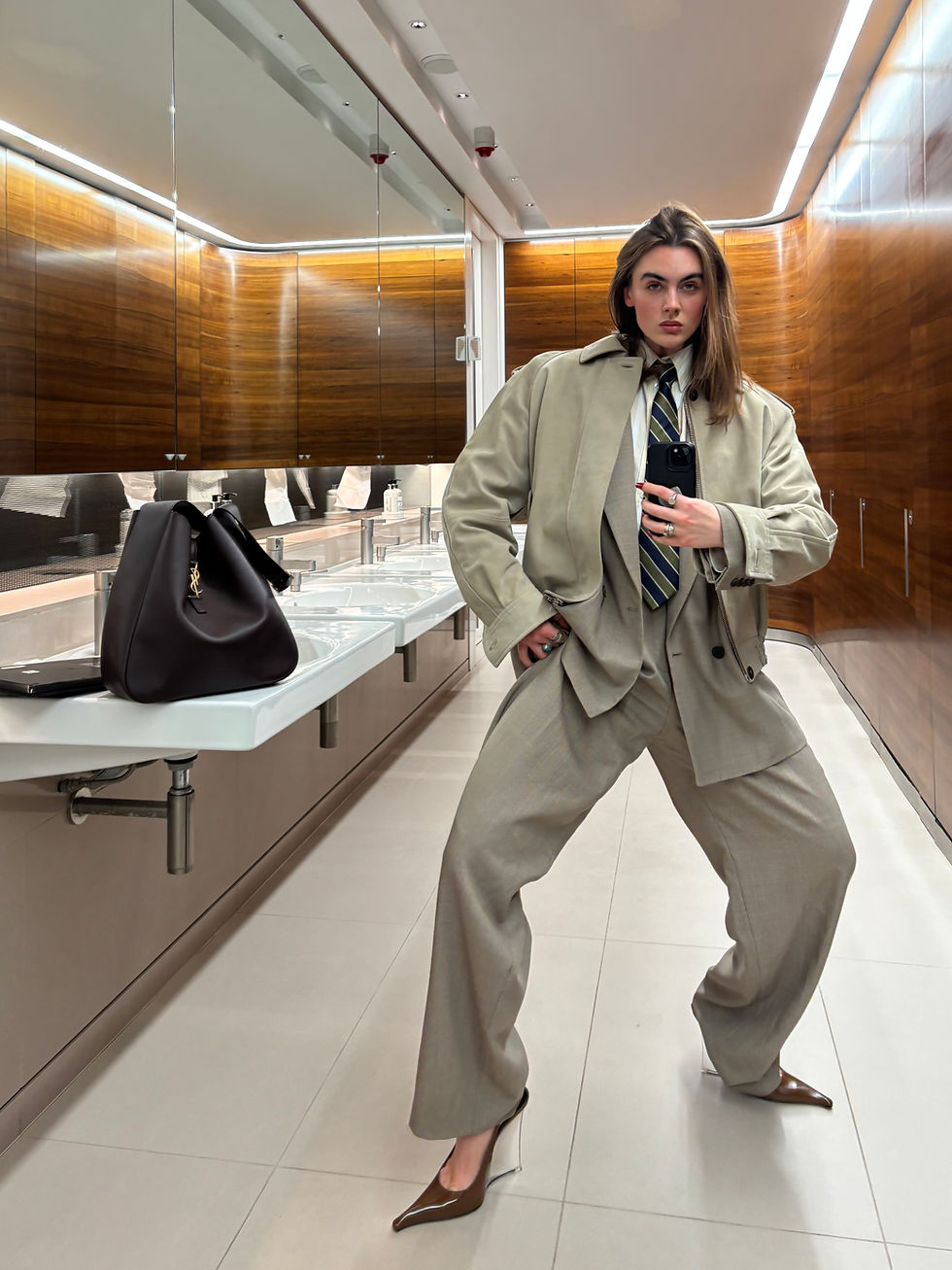
Photos Credits @instagram
What used to be genetic luck is now something you can buy, refine, and repeat. And once something becomes accessible, it doesn’t stay optional for long. It becomes the baseline. As one commenter observed:
“It’s becoming like getting your nails done — just something you’re expected to keep up with.”That sentence should be more alarming than it sounds. Because nails grow out. Faces don’t. And yet, the expectation is creeping in. Slowly, subtly, but undeniably. Not through mandates, but through visibility. Through comparison. Through the quiet realisation that “natural” is starting to look like a lack of effort. Another user captured the shift perfectly:
“It’s not that people judge you for getting work done anymore, it’s that you feel like you’re behind if you don’t.”That’s not empowerment. That’s escalation. We’ve moved from stigma to standardisation, and now to silent competition. And the result? Homogeneity.
“Everyone is starting to look the same.”“It’s like there’s one template now.”This isn’t a coincidence. It’s what happens when beauty is dictated by trends, amplified by algorithms, and executed by the same set of procedures. Faces are no longer evolving, they’re converging. Call it what it is: the mass production of attractiveness. And yet, we continue to frame it as individuality. This is where the conversation becomes uncomfortable, especially for women.
Because the same culture that pressures women to conform is now telling them that conforming is empowering. That altering your face to meet a standard is an act of self-expression. That participation in the system is a form of control over it. But as one Reddit user pushed back:
“Just because something is a choice doesn’t mean it’s empowering.”Exactly. Choice, in this context, is complicated. Because when a system consistently rewards a specific look, socially, professionally, romantically; opting into that system isn’t just personal. It’s strategic.
And opting out? It has consequences.
“Pretty privilege is real, and people respond to it, whether we like it or not.”
So let’s stop pretending this is neutral. Plastic surgery exists within a hierarchy. One where certain faces are valued more than others. One where youth, symmetry, and Eurocentric features continue to dominate; just repackaged in softer, more “inclusive” language. And when that hierarchy becomes accessible through procedures, the pressure doesn’t disappear. It multiplies. Because now, it’s not just about how you were born. It’s about what you’re choosing not to fix.
This is the quiet shift no one wants to fully confront. That the normalisation of plastic surgery hasn’t liberated us from beauty standards, it has tightened them. Made them more precise. More attainable. And therefore, less excusable to ignore. You can’t blame genetics anymore. Only your decisions.
Which brings us back to the central question: how free is a choice when the cost of not making it is invisibility?
This is the paradox of modern plastic surgery. It offers control, but within a controlled system. It promises individuality, but delivers uniformity. It speaks the language of empowerment, while reinforcing the very standards it claims to liberate us from. And perhaps the most uncomfortable truth is this: The pressure isn’t loud because it doesn’t need to be.
As one user wrote:
“It’s always there in the background.”Constant. Ambient. Internalised. That’s what makes it powerful. Because the most effective expectations are the ones we enforce on ourselves.
*This article is informed by a recent conversation on Reddit’s TwoXChromosomes forum, where women openly questioned whether plastic surgery is still a choice or something closer to an expectation.



Comments